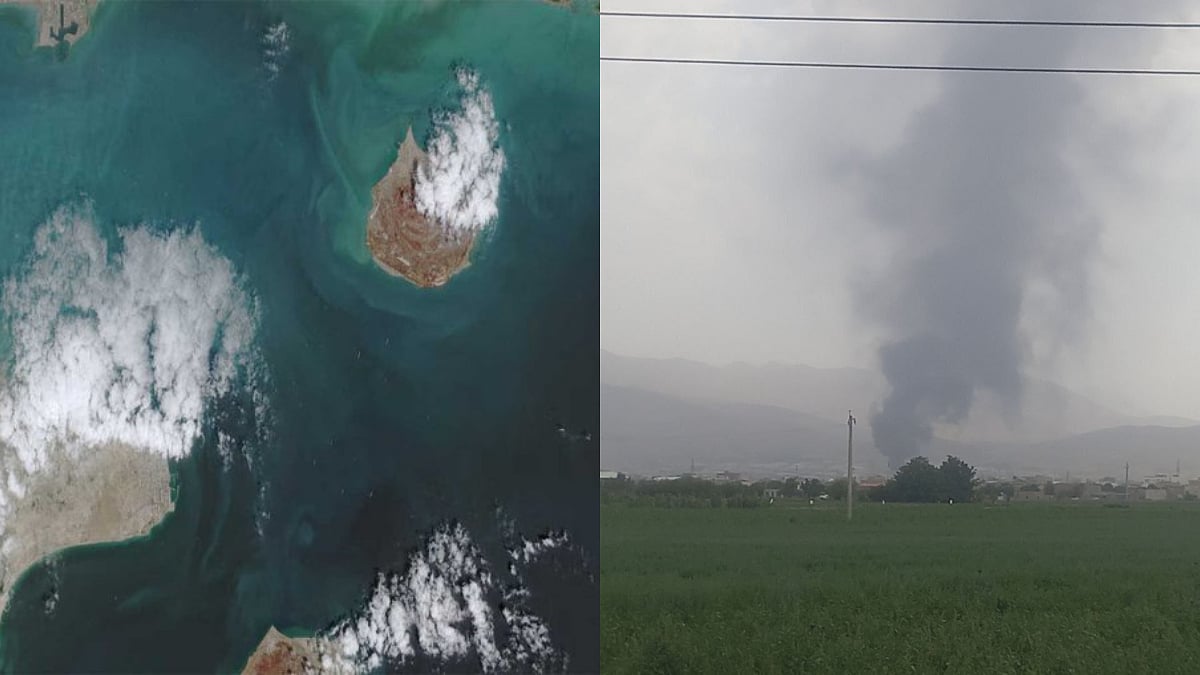
Tehran, July 22: The United States has reportedly executed a missile strike against Iran's Larak Island in the strategic Strait of Hormuz, marking a fresh escalation in the expanding military confrontation between Washington and Tehran across critical Middle Eastern shipping lanes.
According to Iranian news agency Tasnim, the strike occurred on Wednesday afternoon, with local residents reporting a powerful blast.
"At 2.48 pm, the island of Larak was targeted by an American missile," Tasnim reported. "The competent authorities are currently carrying out an investigation to determine the scale of the attack, the exact point of impact and the extent of the potential damage."
Washington has not yet issued an official confirmation regarding the reported strike.
US Operations Continue Against Iran
The incident follows an ongoing military push by American forces against Iranian assets. US Central Command (CENTCOM) confirmed on Tuesday that it had executed its 11th straight night of operations aimed at military targets inside Iran, seeking to weaken Tehran's capability to disrupt commercial maritime transit in the Strait of Hormuz.
The choke point, which handles approximately 20 per cent of global oil shipments, sits at the heart of the standoff. Addressing ASEAN foreign ministers in Manila on Wednesday, US Secretary of State Marco Rubio warned that allowing Tehran to gain control over or disrupt the crucial waterway would establish a "very dangerous precedent" with widespread global ramifications.
Rubio asserted that allowing any nation to dictate terms on international shipping channels, levy tolls, or strike vessels carries far-reaching consequences. While reiterating that Washington remains open to diplomatic engagement, he noted that Tehran was not "serious" about reaching a negotiated solution.
Tensions Spread Across Region
The friction has increasingly spilled into adjacent regional areas. US President Donald Trump cautioned that Washington would react if Tehran-aligned Houthi forces execute threats to block access to Saudi maritime ports.
"If something like that happens, we take care of it," Trump told journalists following discussions with Lebanese President Joseph Aoun at the White House.
Signalling that the American military action remains active, Trump added that the US was "not finished at all" with Iran, remarking that Tehran could require two decades or more to bounce back from the impact of the strikes.
In a parallel development, Iran's Revolutionary Guards disclosed through state news agency IRNA that they intercepted two "non-compliant" oil tankers in the Strait of Hormuz after onboard explosions triggered severe fires, intensifying anxieties regarding global energy security.
Conflict Costs Rise
The military operations continue to demand substantial financial resources from Washington. US Secretary of War Pete Hegseth informed lawmakers that total expenditure for the ongoing conflict has reached USD 37.5 billion, marking a significant rise from the previous assessment of nearly USD 29 billion reported in May.
(Except for the headline, this article has not been edited by FPJ's editorial team and is auto-generated from an agency feed.)

