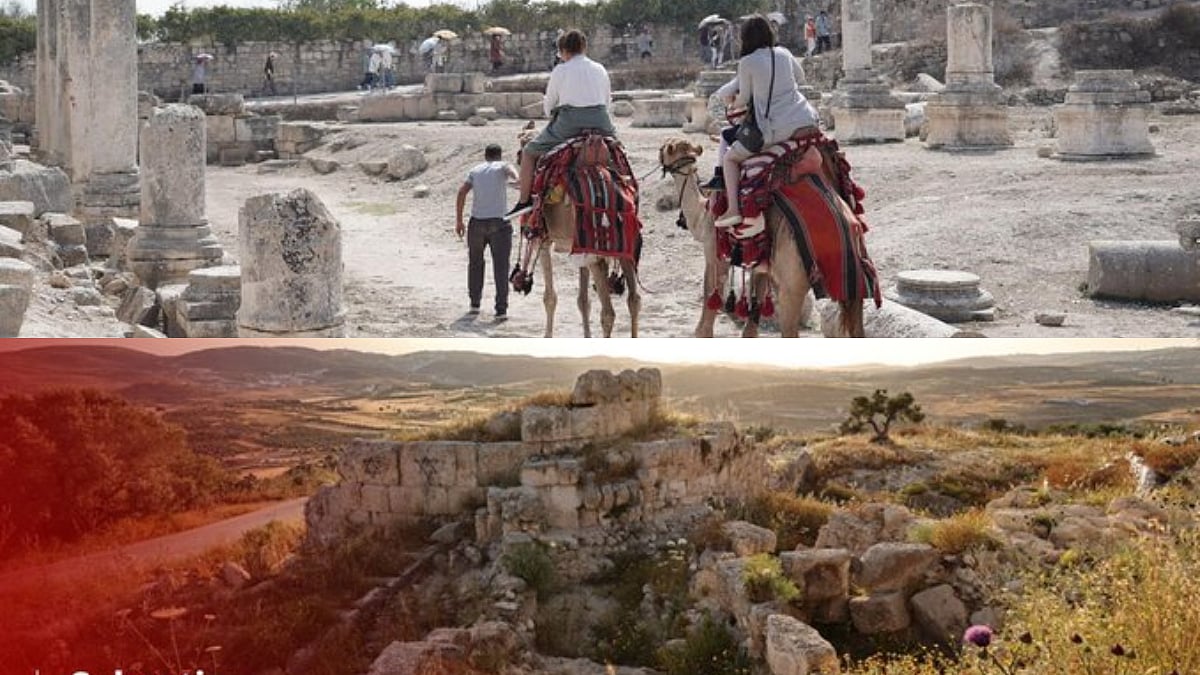
A United Nations Educational, Scientific and Cultural Organisation (UNESCO) committee has voted to add the archaeological site of Sebastia in the Israeli-occupied West Bank and five castles in southern Lebanon's Mount Amel region to the World Heritage List and the List of World Heritage in Danger.
The decision was taken at the committee's meeting in Busan, South Korea, after reviewing both nominations on an emergency basis. It came despite objections from Israel, whose Foreign Ministry had urged UNESCO to reject the nominations, describing them as a “weaponisation of cultural heritage,” the Associated Press reports.
Sebastia, located about 10 kilometres northwest of Nablus, is identified by scholars as ancient Samaria, the capital of the biblical Kingdom of Israel. The site contains archaeological remains from the Iron Age, Roman, Byzantine and Islamic periods. According to UNESCO, Christian and Islamic traditions hold that John the Baptist was buried there.
The Palestinian delegation first submitted Sebastia's nomination to UNESCO in 2012, arguing that World Heritage status was necessary to preserve the largely undeveloped site, which remains under Israeli control and requires further conservation despite attracting tourists.
Israel opposes listings, raises concerns
The latest designation comes as Israel, which does not recognise a Palestinian state, moves to expropriate large areas of land around Sebastia while facing international pressure to curb violence by Israeli settlers in the Palestinian territory.
Also Watch:
In a statement issued on Tuesday, Israel's Foreign Ministry accused the Palestinian delegation of waging a “hostile, one-sided campaign” at UNESCO by falsely portraying Sebastia as an area facing an emergency. It described the move as a political attempt to “erase the site's profound, well-documented Jewish and Christian history.”
Israel, which withdrew from UNESCO in 2019 over allegations that the organisation was biased against it and downplayed its historical ties to the Holy Land, also objected to the inclusion of Beaufort Castle, one of the five nominated castles in the Mount Amel region.
The ministry alleged that Hezbollah, an Iran-backed militant group, had turned Beaufort Castle into a military stronghold by constructing tunnels beneath the site and launching rockets from the surrounding area. It accused UNESCO of ignoring those developments.

UNESCO, Lebanon decline comment
The five castles in the Mount Amel region were recognised for their layered architectural heritage, combining Crusader, Ayyubid, Mamluk and local influences that reflect the evolution of fortified architecture over nearly nine centuries, according to UNESCO.
UNESCO and the Lebanese embassy in South Korea declined to comment on Israel's allegations regarding Hezbollah.
Separately, the UNESCO committee on Wednesday placed Tyre, the ancient Phoenician city in southern Lebanon, on the List of World Heritage in Danger.

