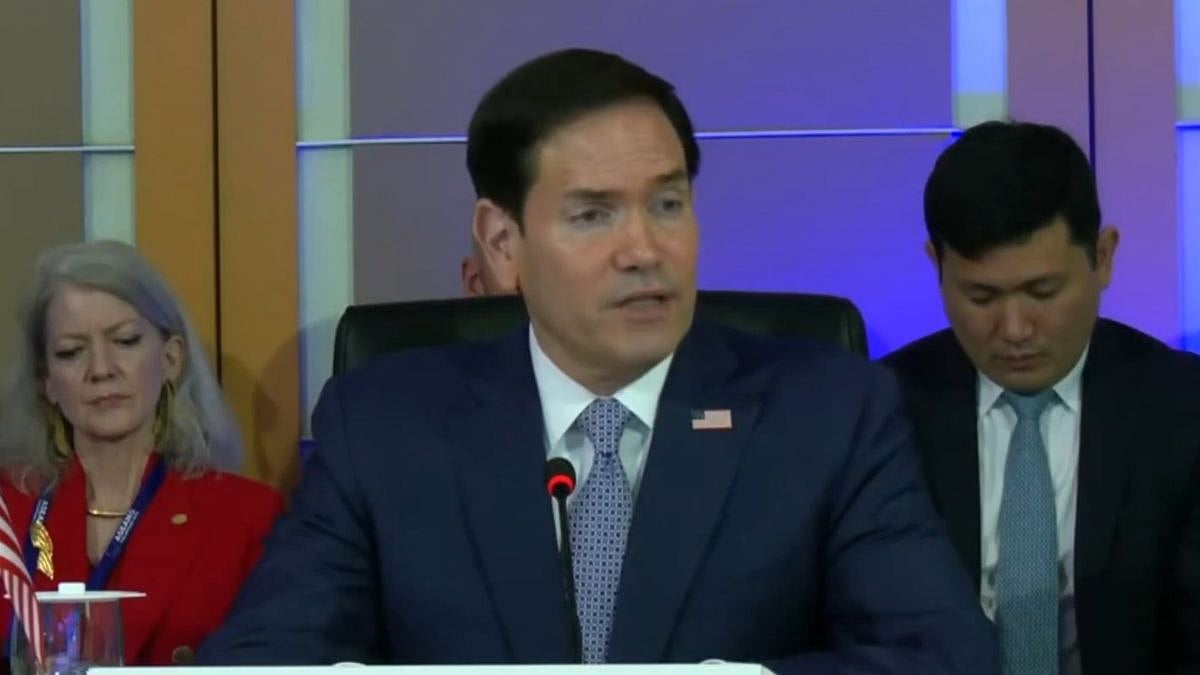
Manila, July 22: US Secretary of State Marco Rubio on Wednesday warned that allowing Iran to control and charge tolls in the Strait of Hormuz would create a dangerous global precedent, saying it could encourage similar actions in other strategic waterways.
Speaking at the Association of Southeast Asian Nations (ASEAN) foreign ministers' meeting in Manila, Rubio said such a move would threaten the global economy and maritime security far beyond the Middle East.
Addressing ASEAN leaders, Rubio stressed that despite the ongoing conflict in the Middle East, Washington remained committed to the region. "We're with ASEAN 100 per cent," he said, warning that if any country is allowed to control an international waterway, impose tolls and threaten ships that refuse to pay, the same model could be repeated elsewhere, including in Asia.
Warning Extends Beyond Region
Rubio also renewed US allegations that Iran had failed to honour commitments under a previous peace agreement. He revealed that Tehran had approached Washington, both directly and indirectly, seeking talks to resolve differences, but made it clear that the US had not indicated any plans to return to negotiations.
The ASEAN ministerial meetings in Manila have brought together senior diplomats from the US, China, Russia and several other countries. Britain's newly appointed Foreign Secretary Ed Miliband also arrived in Manila to participate in the discussions.
Russian Foreign Minister Sergey Lavrov said Moscow wanted to see the conflict between the US and Iran end quickly, noting that prolonged instability was hurting the global economy. He said Russia was interested in stable global energy prices to support long-term economic planning and rejected efforts to prolong the conflict.
Australian Foreign Minister Penny Wong also expressed concern over the worsening situation in the Middle East, warning that conditions could deteriorate rapidly. Calling for an immediate ceasefire and negotiations, she said the Strait of Hormuz should be reopened, adding that rising energy costs were having a direct impact on people's lives.
According to the International Energy Agency (IEA), Southeast Asia's dependence on fossil fuel imports from the Middle East has made the region particularly vulnerable to the ongoing conflict. The agency described the crisis as a "stark wake-up call" for regional energy security.
It noted that Asian markets imported about 80 per cent of the crude oil and nearly 90 per cent of the liquefied natural gas (LNG) passing through the Strait of Hormuz in 2025.
Indo Pacific Security Discussed
Alongside discussions on the Middle East, regional security and China's growing influence remained central to the ASEAN meetings. Rubio met foreign ministers from the Quad grouping, comprising the US, India, Japan and Australia.
The four countries reaffirmed their commitment to strengthening maritime security and promoting a free and open Indo-Pacific in a joint statement issued after their meeting.
Japanese Foreign Minister Toshimitsu Motegi strongly opposed attempts to change the regional status quo by force, referring to tensions in the South China Sea and East China Sea. China continues to assert claims in both regions, including over Japanese-administered islands in the East China Sea.
Echoing those concerns, Australia's Penny Wong described China's actions as destabilising and risky. The Trump administration has repeatedly criticised Beijing's conduct in the South China Sea, particularly actions affecting smaller claimant nations such as the Philippines, one of Washington's oldest treaty allies in Asia.
The South China Sea disputes, involving China, Taiwan, Vietnam, Malaysia, Brunei and the Philippines, also featured prominently in ASEAN discussions. Foreign ministers welcomed progress in long-running negotiations with China on a proposed non-aggression pact aimed at preventing military conflict in the disputed waters.
Fresh tensions surfaced on Monday after another confrontation between Chinese and Filipino forces at a disputed shoal. The incident prompted Philippine President Ferdinand Marcos Jr. to summon the Chinese ambassador in Manila.
In a draft joint statement, ASEAN foreign ministers reaffirmed the need for restraint, confidence-building measures and peaceful management of disputes to preserve regional stability.
Also Watch:
Bilateral Talks Continue
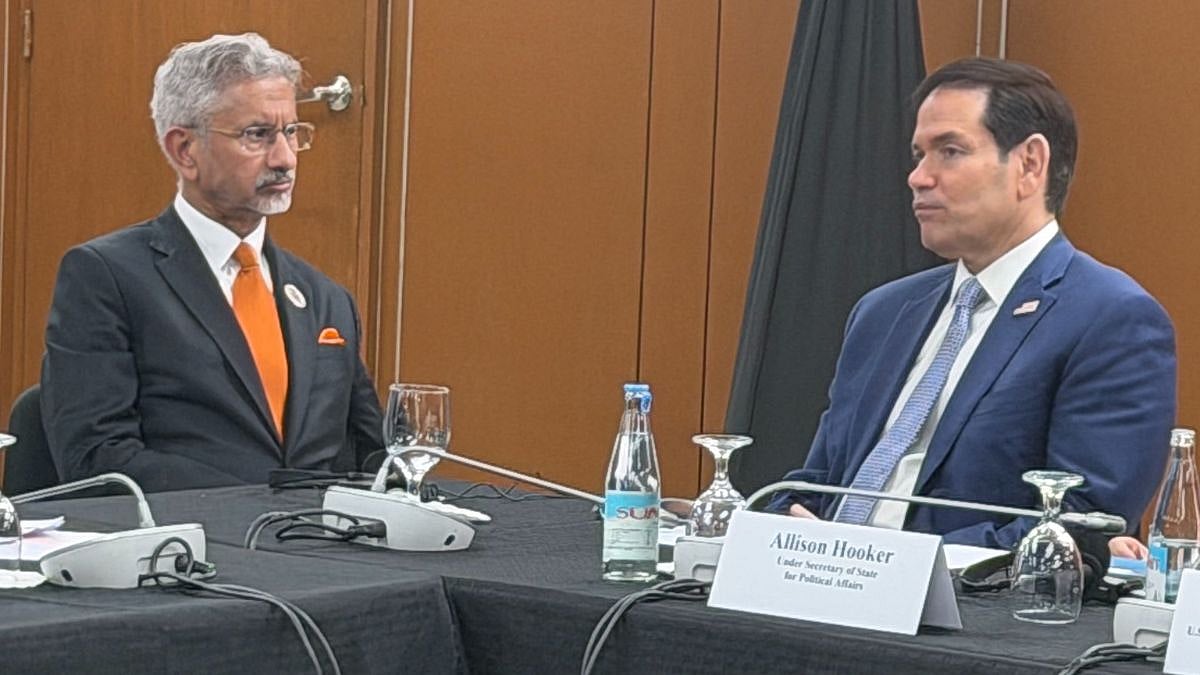
On the sidelines of the meetings, Rubio also held talks with External Affairs Minister Subrahmanyam Jaishankar. According to a US State Department spokesperson, the two discussed regional developments, the Iran conflict and the proposed trade agreement aimed at reducing US President Donald Trump's tariffs on Indian goods.
Rubio later met Chinese Foreign Minister Wang Yi in Manila. Lavrov confirmed that he is scheduled to meet Rubio on Thursday and plans to seek clarification on Trump's recent claim that a settlement to the Ukraine war may be nearing.
To get details on exclusive and budget-friendly property deals in Mumbai & surrounding regions, do visit: https://budgetproperties.in/

