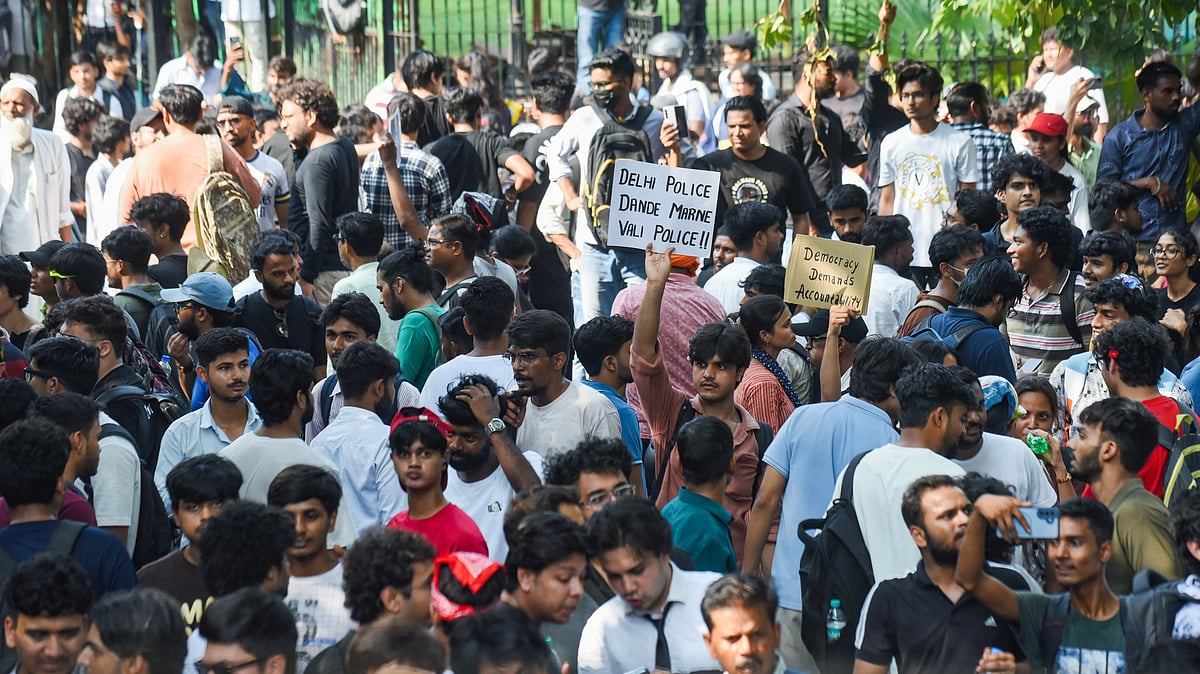
What does it reveal about a democracy when peaceful protesters are met with violence instead of dialogue? Peaceful protest is not an act of defiance; it is a constitutional right and one of the strongest expressions of democracy. When students seeking accountability are met with force instead of meaningful engagement, it raises serious concerns about democratic values, civil liberties, and the willingness of those in power to listen to the very people whose future they are entrusted to protect.
Today, thousands of students across India are protesting not for privilege but for fairness. Their demand is simple: restore the credibility of the education system and ensure that merit—not irregularities—determines success.
For millions of Indians, education is the only route out of poverty. A child from a farming family, a tribal settlement, a small town, or an economically weaker household dreams of becoming a doctor, engineer, lawyer, scientist, or civil servant through hard work and merit. Unlike privileged families, they cannot afford expensive private universities or foreign education. National entrance examinations such as NEET, JEE, and CUET are often their only opportunity to access quality higher education and transform their family's future. Parents make extraordinary sacrifices to keep these dreams alive. Many borrow money, mortgage jewellery, sell land, or spend their life's savings on their children's education. They do so believing that if their child studies sincerely, the system will reward merit fairly. That belief is the foundation of public trust in India's education system.
When examination papers are leaked, recruitment processes are delayed, or allegations of malpractice repeatedly surface, it is not merely an administrative failure. It shatters the hopes of millions of students who have followed every rule and invested years of relentless effort. The consequences are not confined to cancelled examinations; they include emotional distress, anxiety, depression, and, tragically, the loss of young lives to suicide. These are not isolated incidents but symptoms of a system that urgently requires reform.
Equally worrying is the treatment of students who have chosen peaceful democratic protest. The images from Delhi, where students demanding accountability were met with police action, have deeply disturbed citizens across the country. Reports of FIRs being filed against protesters and concerns over the possible use of stringent criminal provisions have only heightened public anxiety. Democracies flourish when governments engage with criticism, not when dissent is treated as a threat. Criminal law should never become the first response to citizens exercising their constitutional rights peacefully.
This moment also raises an important question about political accountability. Leadership is not demonstrated by expressing concern after a crisis; it is demonstrated by accepting responsibility and taking corrective action. When repeated institutional failures affect millions of young people, citizens expect transparent investigations, systemic reforms, and accountability. Moral responsibility cannot remain a slogan—it must be reflected in action.

As educators, we have a responsibility that extends beyond the classroom. Education is not merely about securing employment; it is about nurturing scientific temper, constitutional values, critical thinking, and informed citizenship. Students who question injustice are not weakening democracy—they are strengthening it. Their demand for transparency reflects civic responsibility, not political opportunism.
Public institutions, including Parliament and our universities, exist to serve the people. They are sustained by taxpayers and belong to every citizen, especially the young people whose futures depend on them. Students therefore have every democratic right to ask difficult questions and demand honest answers. Seeking transparency is not an act of rebellion; it is an affirmation of faith in the Constitution.
As an educator, sociologist, and social worker, I stand in solidarity with every student peacefully demanding a fair, transparent, and accountable education system. Their movement is not about politics; it is about protecting the integrity of public institutions and preserving hope for future generations.

India's aspiration to become a global leader cannot be built solely on economic growth or technological advancement. It must also be built on institutions that are fair, transparent, and trustworthy. Every child—irrespective of caste, class, gender, religion, disability, geography, or economic background—deserves an equal opportunity to dream and succeed.
The future of India does not depend only on the buildings we construct or the policies we announce. It depends on whether every young person believes that honesty, hard work, and merit will be rewarded. Protecting that belief is not merely an educational responsibility—it is a constitutional, moral, and national obligation.
(The author is a Pune-based educator, sociologist and social worker)

