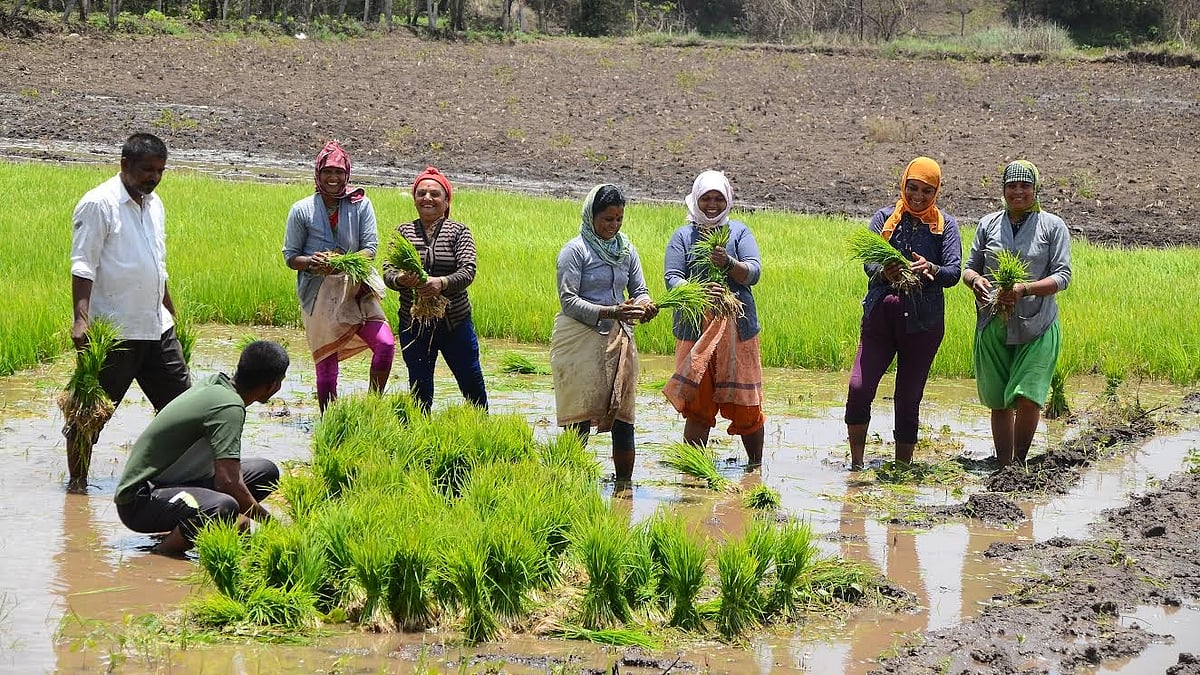
Nashik: Sowing operations for the Kharif season have gained momentum in the district following rainfall suitable for planting over the past few days. Kharif sowing has reached 71.66%, marking a 39.19% increase in just nine days. However, farmers face the potential risk of having to re-sow or dealing with crop diseases if continuous rainfall is not maintained.
Sowing was initially delayed as the monsoon was not active at the start. The pace of Kharif sowing picked up as rainfall intensified in early July. By July 11, only 32.47% of sowing had been completed; subsequently, satisfactory rainfall pushed the figure to 71.66% within nine days.
The district has set a target to sow Kharif crops across an area of 6,40,550 hectares this year. Rainfall has led to increased sowing of crops such as soybean, maize, pearl millet (bajra), tur (pigeon pea), moong (green gram), and urad (black gram). Chandwad taluka recorded the highest sowing at 99.79%, followed by Kalwan taluka at 91.62%. Sowing completion stands at 95.77% in Sinnar and 90.76% in Yeola taluka.
Taluka-wise Progress
- Baglan: 81.07%
- Deola: 80.33%
- Nandgaon: 89.54%
- Niphad: 82.07%
Although sowing has been satisfactory, farmers are concerned about the possibility of having to re-sow. A break in rainfall could reduce soil moisture and increase the risk of diseases affecting tender crops like soybean, cotton, and maize. Paddy Sowing in Igatpuri and Trimbakeshwar Talukas
While paddy is the primary crop in Igatpuri and Trimbakeshwar talukas, sowing operations for other Kharif crops—such as finger millet (nachni), little millet (vari), and groundnut—have also gained momentum. Preliminary data indicates that paddy sowing has been completed across approximately 6,500 hectares in Igatpuri taluka, representing 25% to 27% of the total cultivable area.

Due to uneven rainfall distribution, areas such as Yeola, Nandgaon, and Niphad have not yet received adequate rainfall. Continuous rain over the coming days would accelerate the remaining sowing activities. However, farmers are concerned that a dry spell could jeopardize the entire season and lead to reduced yields.
According to preliminary data from the Agriculture Department, Kharif sowing has got off to a good start, and farmers are hopeful for favorable rainfall distribution.

