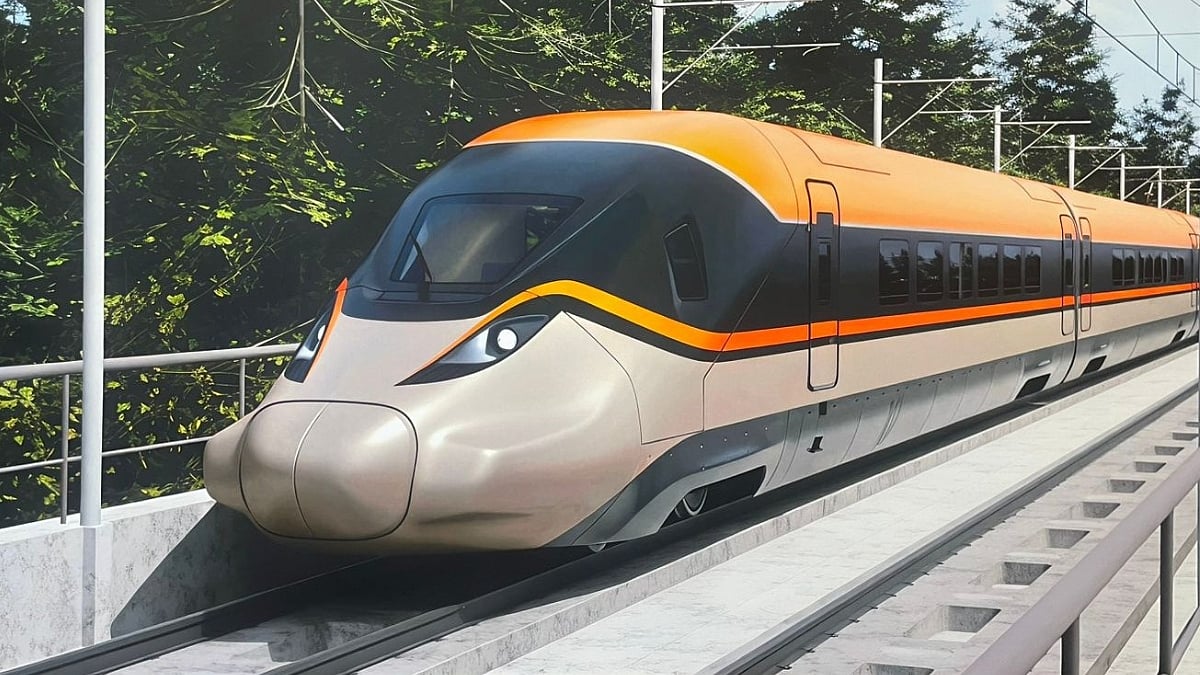
Mumbai: A Japanese railway engineer who was previously associated with India's Mumbai-Ahmedabad High-Speed Rail (MAHSR) project has raised concerns over the progress of the country's ambitious Bullet Train project, alleging that India's decision to move away from Japan's Shinkansen signalling system could majorly impact the project and future bilateral railway cooperation.
Engineer Raises Concerns Over Project's Progress
Hideki Makihara, who currently lives in Delhi and works as a metro vehicle consultant, shared a detailed blog following Japanese Prime Minister Sanae Takaichi's visit to India earlier this month. In a post on X, Makihara criticised what he described as India's handling of the project, claiming repeated changes in commitments and decision-making had stalled progress.
"The Shinkansen project in India is something I was involved with myself, but what stood out in international meetings and negotiations was the sheer recklessness of the Indian side," Makihara wrote. He further alleged that India repeatedly changed its position during negotiations and pursued its own interests, adding that he believed the delays in the project were 'entirely on the Indian side.'
In his blog, Makihara said he has been closely tracking the 508-km Mumbai-Ahmedabad High-Speed Rail corridor despite having no direct professional involvement with the project. Built with Japanese Shinkansen technology and financed through Japanese yen loans, the line is designed for trains operating at speeds of up to 320 kmph. However, he claimed the project's implementation has been far from smooth.
Signalling System Under Scrutiny
A key concern highlighted by Makihara is India's reported decision to adopt the European Train Control System Level-2 (ETCS-L2) instead of Japan's DS-ATC signalling technology. According to him, the National High Speed Rail Corporation Limited (NHSRCL) floated a tender in January 2025 specifying ETCS-L2 as the signalling standard for the entire corridor.
Makihara argued that the decision effectively ruled out the adoption of Japan's proprietary signalling system, stating that two different signalling systems cannot operate simultaneously on the same high-speed rail line. He claimed this marked a major departure from the spirit of the 2015 India-Japan cooperation agreement on the Bullet Train project.
He also questioned why Japanese authorities did not strongly object to the move, saying it could be interpreted as tacit acceptance of India's decision. According to Makihara, the change may have wider implications beyond the Mumbai-Ahmedabad corridor, potentially limiting the future adoption of Japanese railway technology in India's expanding high-speed rail network.

Questions Over Indigenous Trains
The engineer also expressed doubts over India's plans to deploy domestically manufactured high-speed trains for the project's initial operations. While acknowledging that BEML has experience manufacturing metro coaches with technology support from South Korea's Rotem, he said the company has no prior experience in building high-speed trains and is likely to depend on European suppliers for critical components.
Makihara further questioned the timeline for developing India's proposed B28 high-speed trainset, saying it would be difficult to complete manufacturing and testing within the projected schedule. He also noted that railway depots being constructed for the project were originally designed to maintain Japan's E5 Shinkansen trains, potentially creating compatibility challenges if Indian-built trainsets are introduced.
The railway expert claimed that Japan had proposed supplying two Shinkansen trainsets free of cost for testing, crew training and inspection purposes. However, he alleged that the proposal did not materialise after India decided against adopting the Japanese signalling system.
Future Co-operation Questioned
Concluding his blog, Makihara said he had hoped Prime Minister Takaichi's recent visit would revive discussions on restoring Japan's DS-ATC signalling technology for the project. Instead, he expressed disappointment that the latest India-Japan joint statement reiterated cooperation on future Shinkansen technology without addressing signalling compatibility.
The Mumbai-Ahmedabad High-Speed Rail corridor, India's first Bullet Train project, continues to be developed with extensive Japanese financial and technical assistance, though officials have maintained that construction work is progressing in phases.
To get details on exclusive and budget-friendly property deals in Mumbai & surrounding regions, do visit: https://budgetproperties.in/

