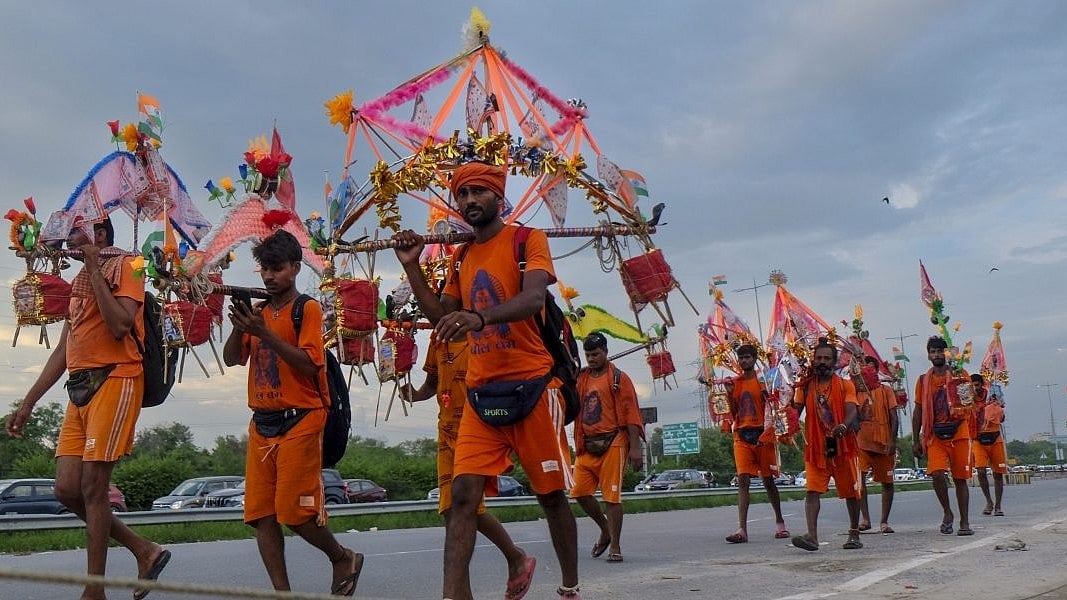
The Kanwar Yatra is one of India's largest annual religious pilgrimages, observed during the holy month of Shravan (Sawan). Every year, millions of devotees of Lord Shiva, known as Kanwariyas, travel on foot to collect sacred water from rivers such as the Ganga, Yamuna and Saryu. They then offer this holy water to Shiva temples, especially Jyotirlingas and prominent shrines across the country. In North India, Shravan has started from Thursday, July 30, 2026, and it will run until September 10, 2026.
Origin of Kanwar Yatra
The origins of the Kanwar Yatra are rooted in Hindu mythology rather than recorded history. According to one of the most popular legends, Lord Parashurama, the sixth incarnation of Lord Vishnu, is believed to have been the first Kanwariya. It is said that he carried holy water from the Ganga in a bamboo pole, known as a kanwar, to perform jal abhishek at the ancient Pur Mahadev Temple near present-day Meerut in Uttar Pradesh. This act is believed to have inspired the tradition that continues to this day.
Mythology of Samudra Manthan
Another widely known belief links the Kanwar Yatra to the Samudra Manthan (churning of the ocean). After consuming the deadly poison halahala to save the universe, Lord Shiva's throat turned blue, earning him the name Neelkanth. Devotees are believed to have offered sacred Ganga water to cool and soothe him, giving rise to the ritual of offering holy water to Shiva during the month of Shravan.
Meaning of Kanwar
The word "Kanwar" refers to the bamboo yoke used by pilgrims to carry water in pots suspended from both ends. Traditionally, devotees walk barefoot, observe fasting or a simple vegetarian diet, and chant "Bol Bam" and "Har Har Mahadev" throughout the journey. Many also follow strict rules of purity and discipline during the pilgrimage.
Other legends behind Yatra
It is said that Shravan Kumar started the Kanwar Yatra. His selfless act of carrying his blind parents in a balanced pole contraption to Haridwar is viewed as the early inspiration for the physical kanwar structure. Other legends credit the demon king Ravana, who is said to have used a kanwar (balanced pole) to carry Ganga water and perform abhishek (ritual bathing) on a Shivalinga to ease Shiva's pain.

