The annual Jagannath Rath Yatra in Puri, Odisha, is one of India's most revered festivals, celebrated every year. The vibrant festival draws millions of devotees from across the world. Every year, three magnificent wooden chariots carrying Lord Jagannath, Lord Balabhadra, and Goddess Subhadra travel from the Jagannath Temple to the Gundicha Temple, and that is why the Rath Yatra is also known as Gundicha Yatra. But do you know what Tahia is? It is a symbolic ornament associated with Lord Jagannath and his siblings. Keep reading to find out.
What is Tahia?
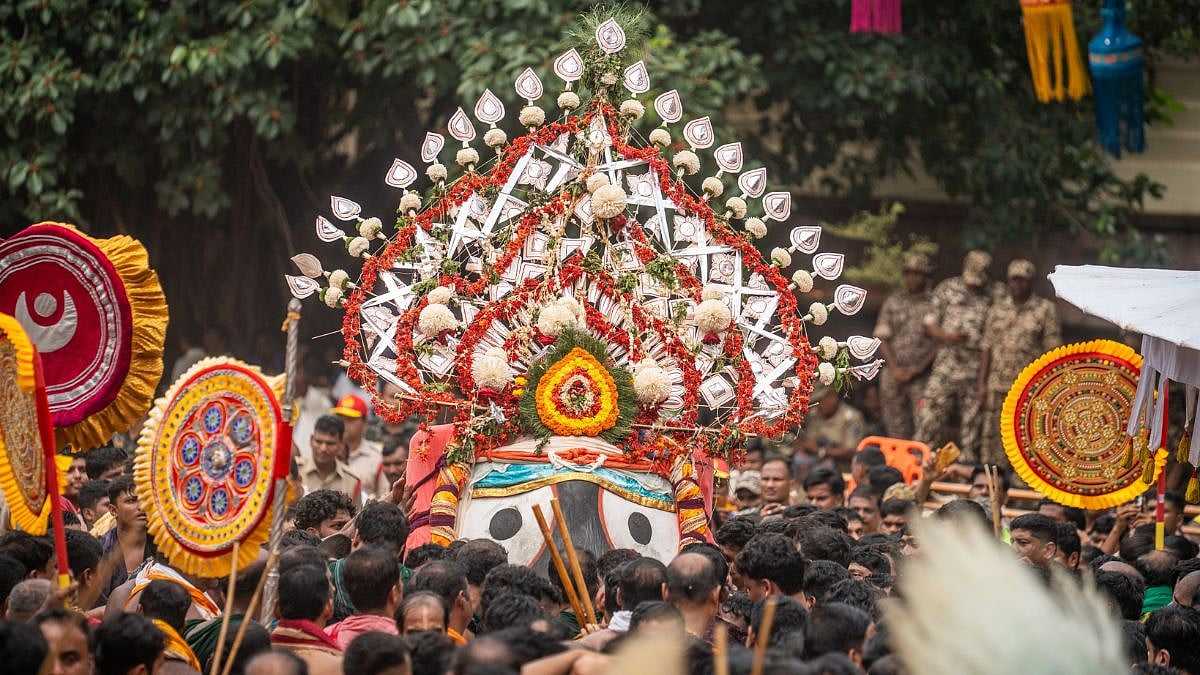
The Tahia or Tahiya is one of the most beautiful and symbolic ornaments associated with Lord Jagannath, Lord Balabhadra, and Devi Subhadra during the annual Rath Yatra in Puri, Odisha.
Unlike a crown made of gold or precious stones, the Tahia is crafted using shola pith (Indian cork), colourful paper, bamboo strips, zari, and delicate floral motifs. Though it appears floral from a distance, it is a lightweight decorative headpiece designed by skilled artisans. The intricate craftsmanship gives it the appearance of a blooming flower, making it one of the most recognisable ornaments of the deities during the chariot festival.
Tahia is linked to Raghab Das
Traditionally, the origin of Tahia is linked to Raghab Das Math and the rule of Gajapati Purushottama Deva. Myths propose that following a celestial event with Lord Madanmohan during Chandan Yatra, the Matha received unique ritual honours, including the holy duty of crafting Tahia for the deities.
A widely held belief links the custom to the devotion of saint Raghab Das, whose faith inspired him to present specially designed floral garlands to Mahaprabhu. The Tahia is made with meticulous attention and adheres to precise measurements. Distinct Tahias are created for Srimandira and Gundicha Temple to accommodate the varying gate designs of each temple.
Worn during Pahandi ritual
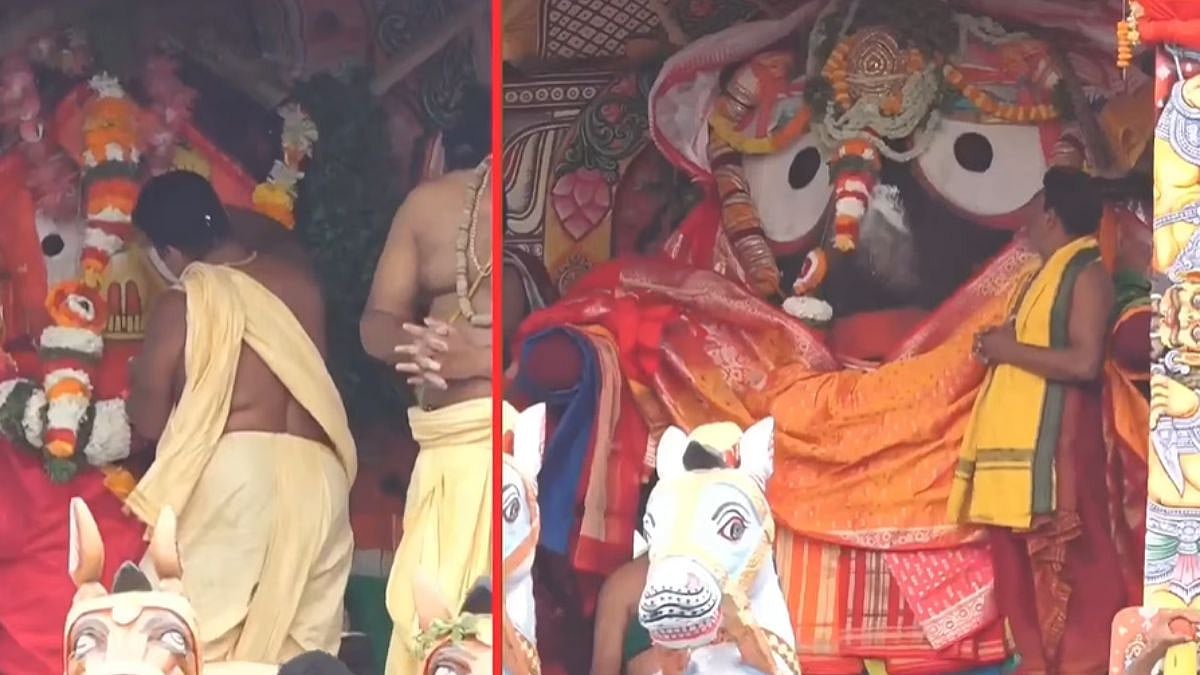
The Tahia is primarily worn by the deities during Pahandi Bije, the grand ceremonial procession in which Lord Jagannath, Lord Balabhadra, and Devi Subhadra are carried from the Jagannath Temple to their respective chariots. The elaborate crown enhances the divine appearance of the deities as thousands of devotees gather to witness the sacred procession.
Each deity has a differently designed Tahia. Lord Jagannath's Tahia is generally the tallest and most elaborate, while those of Lord Balabhadra and Devi Subhadra vary in shape and size according to traditional customs. Every Tahia is handmade following age-old temple traditions passed down through generations of artisans.
Craft preserved through generations
The making of the Tahia begins weeks before Rath Yatra, with artisans dedicating countless hours to its intricate design. The craft has been preserved by families who have inherited the responsibility for generations. A total of four Tahias (floral headgears/crowns) are worn by the deities during the Pahandi procession at the start of Rath Yatra, with another four Tahias used when moving them from the chariots to the Gundicha Temple.

