Every day, Mumbai's streets tell the same story. Millions of commuters inch forward through congested roads, vehicles queue endlessly at railway crossings, and ageing bridges struggle to cope with traffic volumes they were never designed to handle. For a city where every minute matters, these delays translate into lost productivity, increased fuel consumption, higher emissions and immense commuter frustration.
Mumbai's suburban railway network, often described as the city's lifeline, carries more than seven million passengers every day. While this vast rail network keeps the city moving, it also creates physical barriers between neighbourhoods, forcing road traffic to converge at a limited number of crossings. As the city's population continues to grow and redevelopment transforms older industrial areas into thriving commercial and residential hubs, the demand for seamless road connectivity has never been greater.
Over the past decade, projects such as the Metro network, the Coastal Road and the Mumbai Trans Harbour Link have captured public imagination as symbols of a rapidly modernising metropolis. Running quietly alongside these mega projects, however, is another equally significant transformation—one that is literally bridging divides across the city.
Spearheading this effort is the Maharashtra Rail Infrastructure Development Corporation (MahaRail), which has emerged as one of the state's key infrastructure agencies. While the corporation has been associated with major railway projects across Maharashtra, it has simultaneously undertaken an extensive programme to eliminate railway level crossings and replace ageing bridges with modern Road Over Bridges (ROBs), Road Under Bridges (RUBs) and subways.
Across Maharashtra, MahaRail has already completed 56 such structures, significantly improving road safety, reducing travel time and enhancing rail operations. Yet nowhere is this transformation more visible than in Mumbai, where a series of technologically advanced bridge projects is redefining how people move across one of the world's busiest urban landscapes.
From Standalone Bridges to an Integrated Mobility Network
Modern bridge construction in Mumbai is no longer about simply replacing old structures. Every new bridge is conceived as a vital component of a larger mobility ecosystem that connects suburban railways, Metro corridors, highways, elevated roads and future transport infrastructure.
The objective is far more ambitious than easing local congestion. It is about creating uninterrupted movement across railway corridors that have divided neighbourhoods for generations while ensuring that future traffic demands can be accommodated without requiring repeated reconstruction.
3D image of Ajni Bridge |
This integrated planning approach is particularly important for Mumbai, where infrastructure projects cannot function in isolation. Every bridge must seamlessly connect with existing roads, future corridors and expanding transport networks, allowing commuters to travel more efficiently across the city.
The result is infrastructure that is designed not merely for today's requirements but for the Mumbai of tomorrow.
Reay Road: Mumbai's first cable-stayed railway bridge
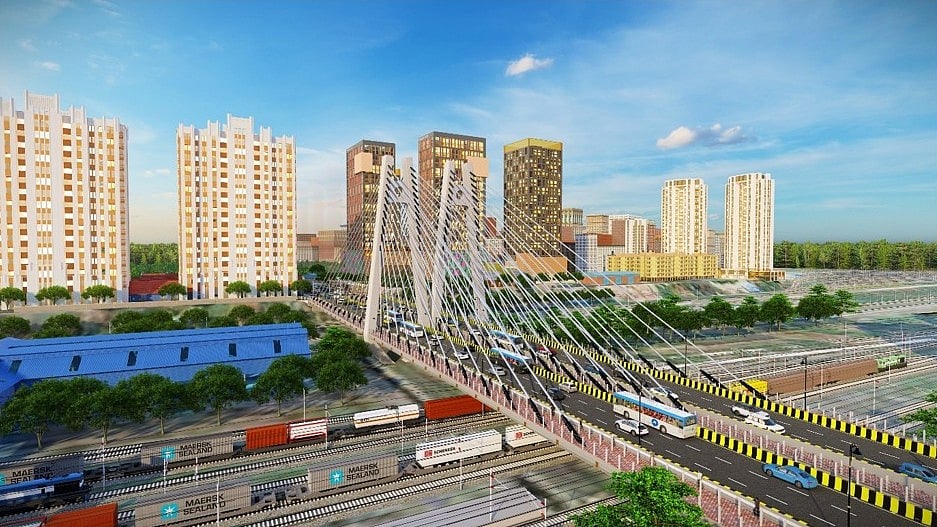
Among the most visible examples of this new approach is the Reay Road Cable-Stayed Road Over Bridge, a landmark project that has introduced an entirely new engineering typology to Mumbai.
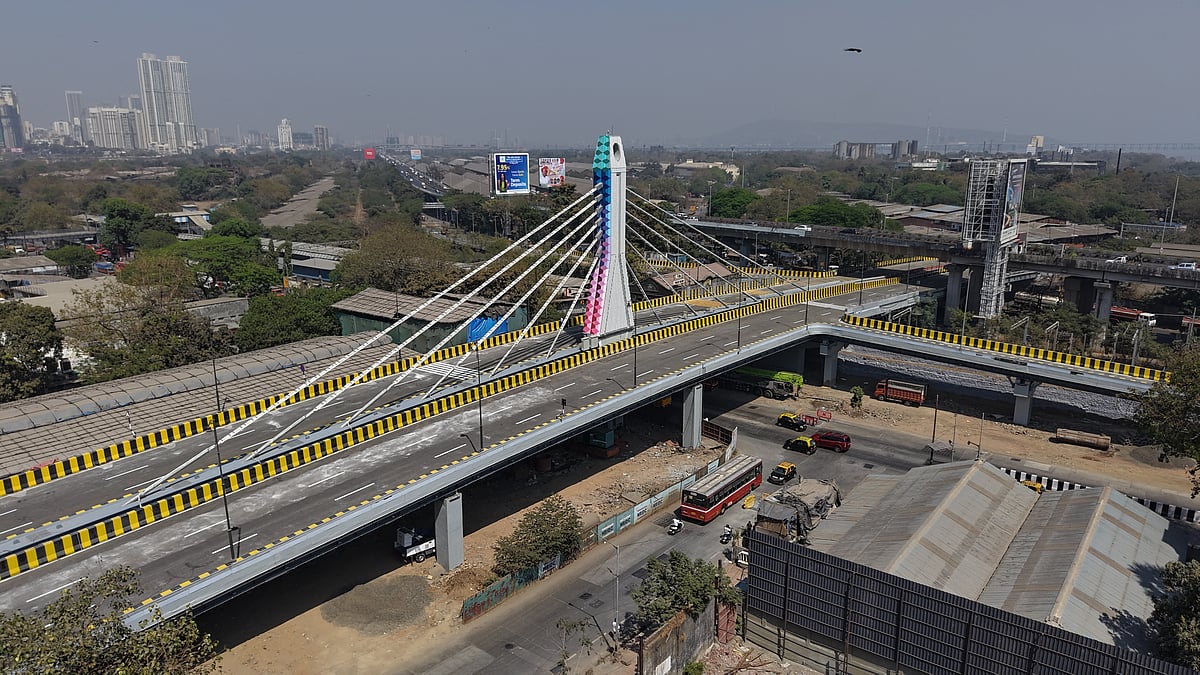
Reay Road Cable-Stayed Road Over Bridge |
The original Reay Road bridge had served South Mumbai faithfully for decades. However, increasing traffic volumes, changing vehicle profiles and growing industrial activity around the eastern waterfront meant that the old structure could no longer meet contemporary mobility needs.
Its replacement is much more than a wider bridge. It represents Mumbai's first cable-stayed railway bridge, combining engineering innovation with architectural elegance while significantly improving connectivity across one of South Mumbai's busiest transport corridors.
The new six-lane bridge provides substantially wider carriageways, smoother traffic movement and enhanced safety features. Its striking cable-stayed design has also created a distinctive addition to Mumbai's evolving skyline, symbolising the city's transition towards world-class urban infrastructure.
The bridge has become particularly important for commercial vehicles, industries and logistics operators serving the dock areas, where delays at the earlier bridge frequently disrupted movement. Improved east-west connectivity has reduced travel time while supporting ongoing redevelopment along Mumbai's eastern waterfront.
Having successfully completed this milestone, MahaRail has now shifted its attention towards another equally ambitious project in central Mumbai.
Byculla: Engineering above a city that never stops
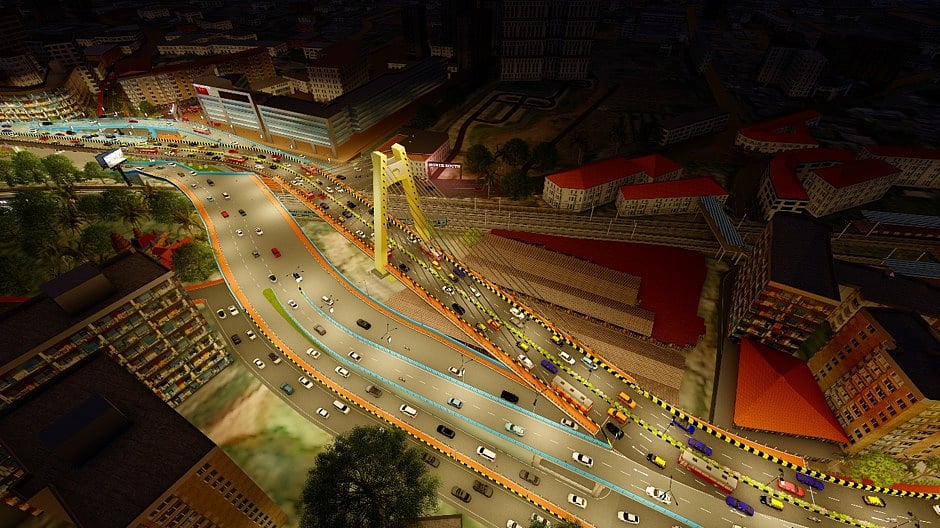
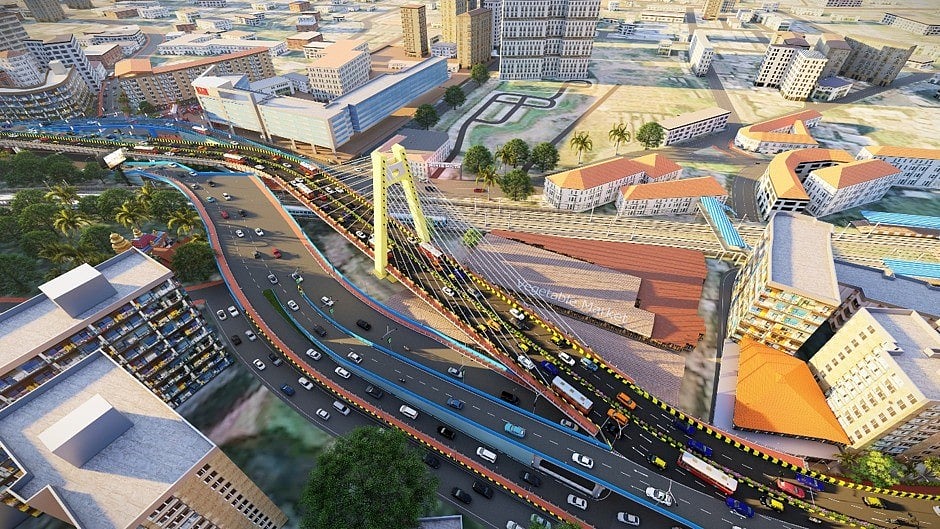
3D Day and Night view of Proposed Byculla Cable Stayed Bridge |
Constructing infrastructure over one of India's busiest railway corridors is never a straightforward task. Trains continue to operate at high frequency throughout the day, leaving engineers with extremely limited windows to carry out complex construction activities.
This challenge defines the Byculla Cable-Stayed Road Over Bridge, one of MahaRail's most technically demanding ongoing projects. Replacing the ageing bridge requires precision planning, advanced engineering and close coordination with railway authorities to ensure that construction proceeds without disrupting Mumbai's suburban rail services.
The project recently achieved a significant milestone with the successful installation of all 40 stay cables, the primary structural elements that support the bridge deck. This accomplishment marks the completion of one of the most complex phases of construction. Work has now progressed to deck slab construction, approach roads and finishing activities, bringing the project steadily closer to completion.
Once operational, the bridge will provide a wider and more efficient connection between Byculla East and West, areas that currently experience severe congestion due to narrow approaches and heavy commuter traffic around the railway station. For thousands of daily commuters, smoother traffic flow will reduce journey times and improve travel reliability. Equally important, emergency vehicles—including ambulances and fire services—will be able to navigate the corridor more quickly, an advantage that could prove critical during medical emergencies.
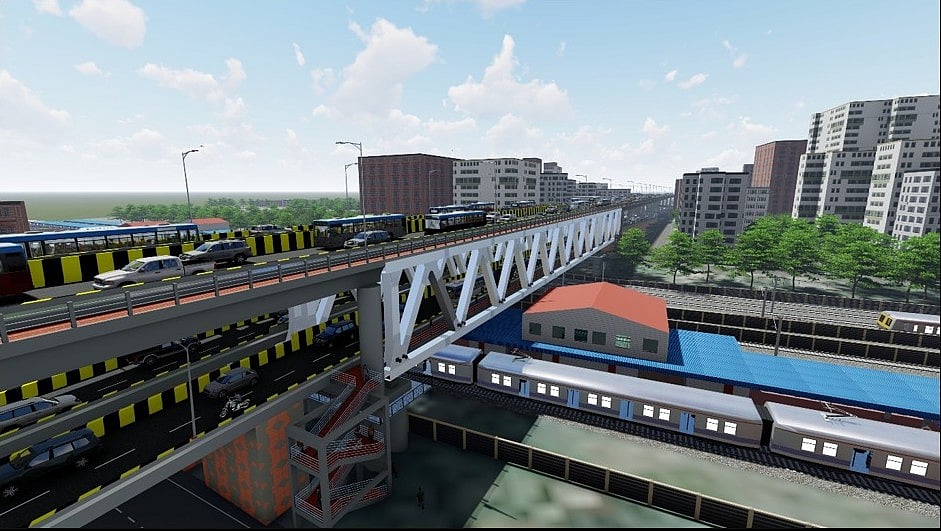
3D image of Elphinstone double decker bridge |
Elphinstone: A double-decker vision for urban infrastructure
If the Byculla bridge demonstrates engineering precision, the Elphinstone Double-Decker Road Over Bridge showcases a bold reimagining of urban transport infrastructure. The project is set to become Mumbai's first double-decker railway bridge, introducing an innovative design that addresses both present-day traffic challenges and future transportation requirements.
The earlier bridge, which had served commuters for decades, has already been dismantled, paving the way for a modern replacement designed with long-term urban integration at its core.
Unlike conventional Road Over Bridges that primarily serve road traffic, the new double-decker structure has been conceived as part of a larger transport framework capable of accommodating future infrastructure expansion. Its strategic location between Parel and Prabhadevi makes the project especially significant.
Over the past two decades, these neighbourhoods have undergone one of Mumbai's most dramatic urban transformations. Former textile mills have given way to corporate headquarters, premium residential developments, hospitals, educational institutions and commercial complexes, generating traffic volumes far beyond what the area's original road network was designed to handle.
The new bridge aims to ease this pressure while creating additional transport capacity that will support continued redevelopment for years to come. Expected to be completed in 2027, the Elphinstone Double-Decker Road Over Bridge is likely to become not only a major transport asset but also one of Mumbai's most recognisable engineering landmarks.
Sewri: Connecting Mumbai's new growth corridor
A few kilometres away, another strategically significant bridge is taking shape. The Sewri Road Over Bridge represents far more than a railway crossing. It is a crucial link in Mumbai's rapidly expanding regional transport network. Designed to connect the Mumbai Trans Harbour Link (Atal Setu) with the upcoming Sewri-Worli Elevated Corridor, the project will play a pivotal role in integrating South Mumbai with Navi Mumbai and the wider Mumbai Metropolitan Region.
The opening of Atal Setu has dramatically improved travel between Mumbai and Navi Mumbai. However, faster regional connectivity also requires efficient movement within the city itself. Without adequate internal distribution, congestion simply shifts from one location to another.
The Sewri bridge addresses this challenge by providing seamless connectivity for passenger vehicles, freight traffic and commercial transport moving between major transport corridors.
Construction is progressing steadily, with teams currently undertaking girder launching and superstructure works.Once completed, the bridge is expected to significantly reduce congestion on surrounding roads while improving access to Mumbai's eastern waterfront, port facilities and logistics hubs.
Its importance extends beyond immediate traffic relief. The project forms an integral part of the broader redevelopment vision for Mumbai's eastern coastline, where transport infrastructure, urban renewal and economic development are progressing simultaneously.
Strengthening connectivity in the northern suburbs
While South Mumbai's cable-stayed bridges often capture public attention, MahaRail's work in the northern suburbs addresses an equally pressing challenge—that of rapidly expanding suburban growth. The Naigaon Road Over Bridge in Palghar district illustrates this changing urban landscape. Over the past several years, Virar, Vasai and Naigaon have emerged as some of the fastest-growing residential corridors within the Mumbai Metropolitan Region. Improved housing affordability has attracted thousands of families, resulting in a sharp increase in road traffic. Yet much of the supporting infrastructure has struggled to keep pace.
Existing railway level crossings frequently witness long vehicle queues during peak hours, disrupting daily travel for office-goers, school buses, freight vehicles and emergency services. To address these issues, MahaRail is constructing a modern Road Over Bridge that will eliminate the level crossing altogether, enabling uninterrupted movement across the suburban railway corridor. Foundation activities and pile-cap concreting are currently underway.
Although the project may not possess the visual grandeur of Mumbai's cable-stayed bridges, its impact on commuters is expected to be equally meaningful through shorter travel times, improved road safety and greater transport efficiency.
Engineering the future of mobility
Infrastructure is often judged by its scale, but its true value lies in how seamlessly it becomes part of everyday life. The bridges rising across Mumbai are not merely concrete structures spanning railway tracks; they are essential links that shorten journeys, improve safety and reconnect neighbourhoods long separated by rail corridors.
By integrating bridges with highways, Metro systems, elevated corridors and regional transport networks, MahaRail is helping create a more connected and resilient urban landscape. Each completed project removes a bottleneck, enhances economic activity and improves the daily experience of millions of commuters.
As Mumbai continues to evolve into a global megacity, its infrastructure must evolve with it. The ongoing bridge programme reflects a long-term vision that looks beyond immediate congestion to anticipate future mobility needs.
For countless Mumbaikars, these bridges will quietly become part of their everyday commute. Yet collectively, they represent something much larger—the steady construction of a city where movement is smoother, connections are stronger and infrastructure is designed not just for the present, but for generations to come.

