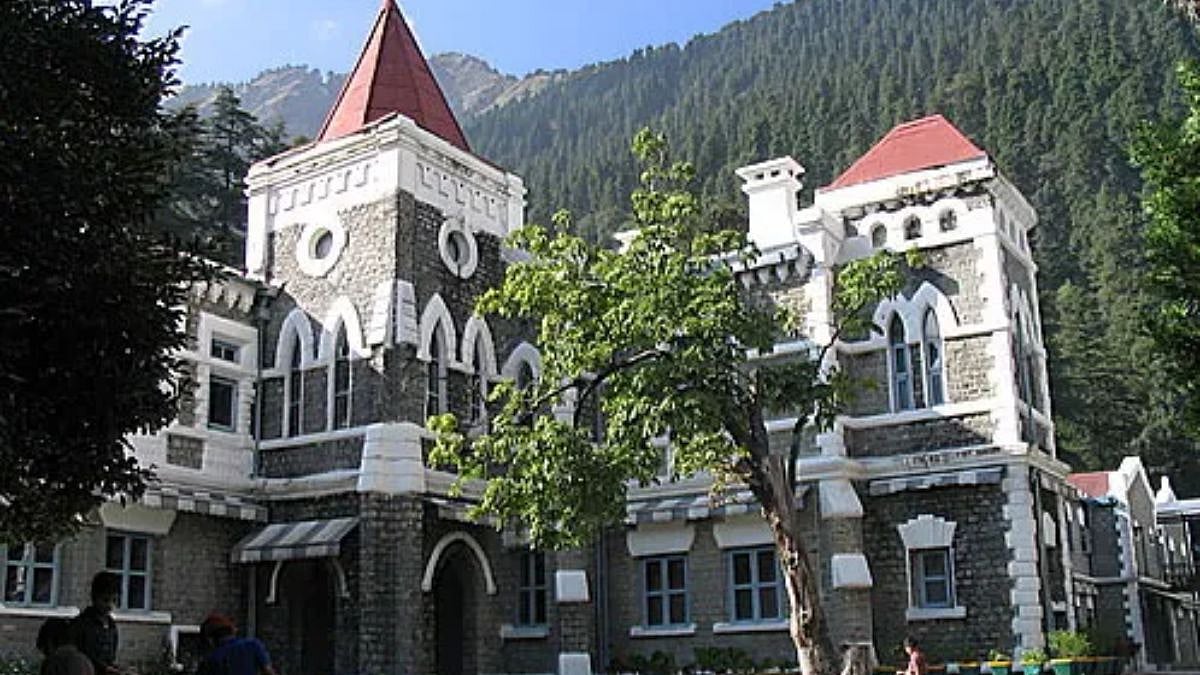
The Uttarakhand High Court on Tuesday came down heavily on the State Police for detaining Uttarakhand Parivartan Party (UPP) president Prabhat Dhyani while he was travelling to Delhi to participate in a protest. During the hearing, the court repeatedly questioned the legal authority under which Dhyani was stopped and detained, remarking that the police's conduct amounted to "gundagardi" (hooliganism).
A Division Bench of Justice Ravindra Maithani and Justice Siddhartha Sah was hearing a petition challenging Dhyani's detention after he announced on social media that he would join the Cockroach Janta Party's (CJP) march towards Parliament in support of students protesting the alleged NEET paper leak. While the State defended the detention as "totally legal", the Bench repeatedly sought to know under which provision of law the police had acted, Live Law and Bar & Bench report.
'Who are you to stop him?'
The State relied on Section 163 of the Bharatiya Nagarik Suraksha Sanhita (BNSS), which allows Executive Magistrates to issue urgent preventive orders to maintain public order. The Bench immediately questioned whether the Dehradun District Magistrate had issued any such authorisation.
The State's counsel argued that Dhyani had publicly declared his intention to participate in the march through a social media post. According to the State, while there was no objection to protests at Jantar Mantar, permission had not been granted for a march to Parliament.
The Bench, however, questioned why the Uttarakhand Police was attempting to enforce restrictions applicable in Delhi.
"Who are you? You are not Delhi Police," the court orally observed.
The State argued that if information was available about a cognisable offence likely to be committed anywhere in the country, the police had the power to detain those concerned. The Bench was unconvinced and asked what cognisable offence Dhyani had committed, pointing out that Section 163 BNSS was not even in force in Uttarakhand at the relevant time. It also asked what lawful directions had been issued under Section 172 BNSS, which requires compliance with lawful police directions.
The State further argued that Dhyani, as the leader of a political party, had boarded a train from Rishikesh to New Delhi to join the protest and was released within 24 hours. It submitted that violation of Section 163 BNSS is punishable under Section 223 BNSS and claimed Dhyani refused to seek permission after being stopped.
However, the Bench observed that any alleged violation of prohibitory orders would occur in Delhi and questioned what territorial jurisdiction the Uttarakhand Police had to prevent him from travelling.
"He has the right to move anywhere in the country. Who are you to stop him? Where is the cognisable offence?" the Bench orally remarked.
Court rejects 'national security' defence
As the hearing progressed, the Bench became increasingly critical of the State's stand.
Reading from documents placed before it, Justice Maithani remarked, "This is gundagardi. What lawful direction have you issued? 'Don't go to Delhi, don't join the march.' Delhi Police will take care of it. Who are you to stop him?"
The court also took exception to references in the police records about protecting the government's image.
"What are you doing in this country? Are you here to protect the image of the government or the constitutional rights of an individual?" the Bench asked, adding that the manner in which the police had acted was "absurd".
When the State later cited national security concerns, the Bench rejected the argument.
"This is not national security. In the name of national security and the government's image, don't harass people," the court orally observed.
Justice Maithani further warned that accepting the State's interpretation would lead to anarchy, saying the Constitution guarantees citizens the freedoms protected under Articles 19 and 21.
The Bench thereafter issued notice to the respondent authorities and directed them to file their response within four weeks.
Detention, release and questions over procedure
The matter had first come up before the High Court on Monday, when the Bench questioned the circumstances under which Dhyani had been detained. It also sought an explanation from the police over why Dhyani, an adult, was allegedly handed over to his mother after his release instead of simply being set free.
During Tuesday's hearing, the petitioner's counsel clarified that Dhyani had actually been handed over to the custody of his wife, not his mother.
According to the petitioner, Dhyani was first detained by the Government Railway Police and the Rishikesh Police before being taken to the Ramnagar Police Station in Nainital district. He was eventually released within 24 hours.
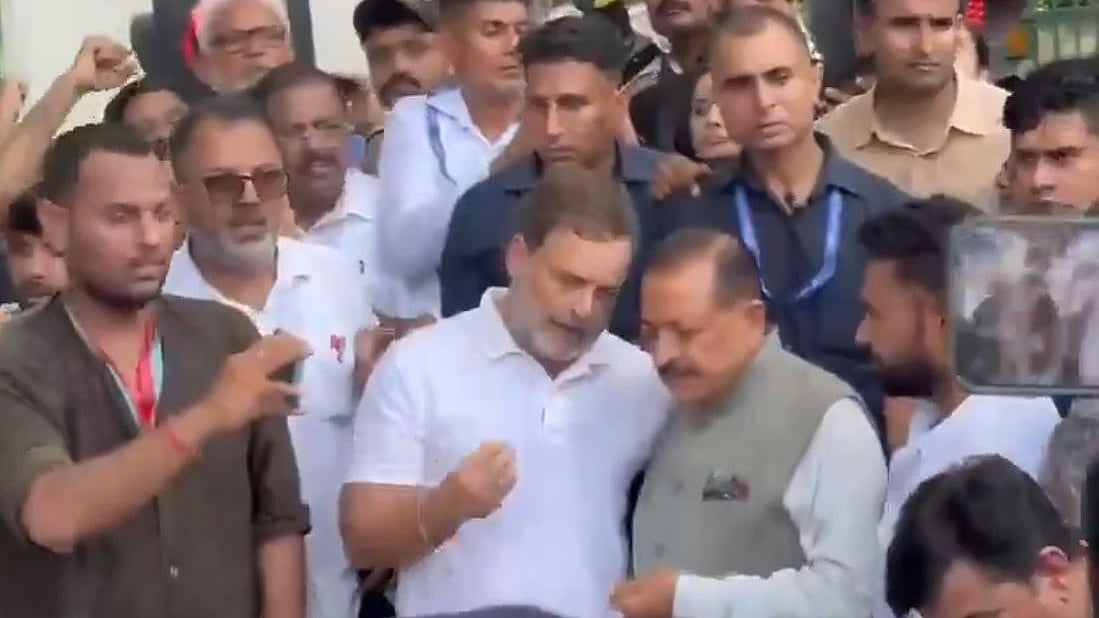
The petition alleges that Dhyani's detention was illegal, arbitrary and carried out without following due process. It states that after learning he had been taken to the Ramnagar police station, the petitioner submitted a written representation seeking information about Dhyani's whereabouts, the legal basis for his detention, the grounds for his custody and permission to communicate with him. The petition claims the police neither acknowledged the representation nor provided any information.
It also states that Dhyani suffers from multiple health conditions requiring regular medical attention, raising concerns over his safety during the period of detention.
Apart from seeking Dhyani's production before the court, the petition seeks directions to the police to place on record all documents relating to his detention, including the legal authority for his apprehension, the grounds of detention, the arrest memorandum, details of the place of detention and all other records justifying his custody. It also seeks preservation of CCTV footage from the Rishikesh railway station and the Government Railway Police premises.
During the hearing, the State maintained that Dhyani's Facebook post expressing support for activist Sonam Wangchuk and indicating that he intended to join the protest justified preventive action. The court, however, made it clear that a citizen's constitutional right to travel cannot be curtailed merely on the apprehension that he may participate in a protest elsewhere, leaving serious questions over the limits of police powers in preventive detention cases.

