
Education sector is a domain of activity that must operate with utmost consensus. Unlike other sectors, it creates the most important and crucial asset known as “Human Capital” that leads a nation in future for its growth and development: both economic as well as social. Any lack of consensus may result in defective output in terms of its quality that has potential to decay of society and civilisation in years to come. The effect is prominent and long-lasting. This sector, therefore, needs special care, focus, and guidance with unifocal support from all stakeholders. The counties that have shown phenomenal growth in the recent times including China are a testimony to the congruent approach to this vital sector.
Three Pillars of Education Excellence:
The three pillars that are at the core of education include:
Quality with Equity: Every learner should have access to quality education irrespective of location, gender or economic background. Equity and excellence must progress together.
Strong Institutional Structure: High-quality curricula, competent institutions, motivated teachers, academic autonomy and effective governance are indispensable.
Simple and Coherent Regulation: Regulation should support quality and innovation rather than burden institutions with overlapping compliance and conflicting directives.

India’ educational journey and challenges:
Education in India since independence has received a lopsided attention from the government. The first comprehensive education commission came in 1964-65 (Kothari Commission) only after more than 15 years of independence. Education was earlier in state list; it was in 1976 that the sector was brought under concurrent list permitting both the state as well as the centre to make laws on the same. This created further problem in term of multiplicity of regulations and suffocating the institutes; our research at HEF shows that the top leadership of an educational institute (particularly in HEI) spends a significant portion of their time in managing the requirements of different regulators that sometimes range 3 to 4 (particularly technical and professional education) and many times giving contradicting or multi-stage guidelines or compliances. In school education, the system is equally challenging.
Before Kothari commission recommendation giving a structure of 10+2+3 for education system, different states had their own and different structure making the learning outcome different and varied. Even after Kothari Commission, we today see different types of school structure like State Boards, CBSE, IB, Cambridge, etc. While the country saw the emergence of great institutions like IITs, IIMs, AIIMS, etc. during the period, but the overall quality of the education has never been up to the desired extent; this applies across the board to many state-run schools and several HEIs.
In brief, despite extensive expansion, quality remains uneven. Some institutions receive far more applicants than they can admit, while many others struggle to attract students. This imbalance reflects differences in quality, governance, and public confidence.
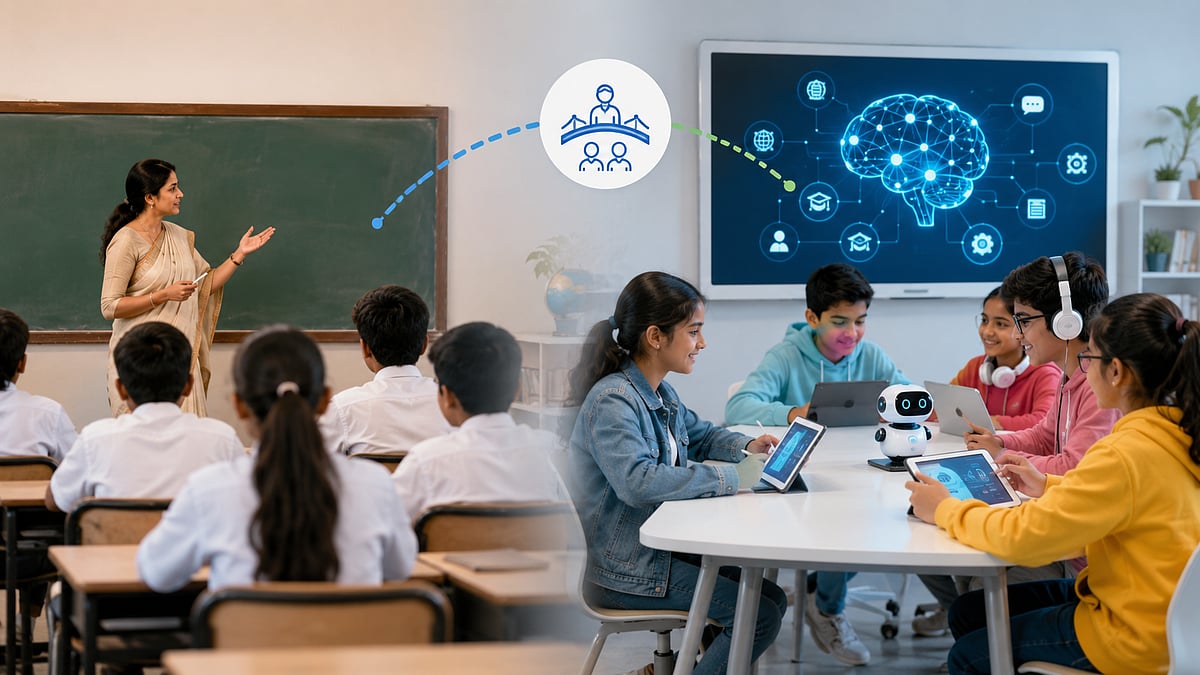
Difference of opinion exists between the states and the centre in the matter of control over the jurisdiction of the education, and that itself is a disturbing feature creating confusion in the minds of the most important stakeholders i.e. the students. For example, some states are saying, "Cancel the NEET", while some others are for it. Education system in India is unfortunately being seen from the lense of political system or ideology rather than looking at bigger picture of the country.
One other problem is the trend of “systematic outsourcing” of education to coaching centres. We have never heard of a manufacturing sector outsourcing its main capability. They can outsource raw material production, their HR activities, or ancillary things, but cannot offload the production capability without getting them vetted. And that is what is happening in the case of the education sector in India; actual delivery of the education is being outsourced at many places to the “outside coaching centres” or sometimes called “education partners”. This is indeed an unfortunate trend and is a pointer towards the deteriorating quality of educational system and teaching in the country.
Teaching community who are the other most crucial stakeholder in the entire gamut of education are also feeling the pinch. Less pay, different types of appointments like contractual, ad-hoc, adjunct, etc., huge teaching workload, absence of balance between teaching and research load, ancillary duties (like election work) are taking a toll on both their physical as well as mental wellbeing. If this situation continues for a long time, getting good teachers “by choice” is going to be an issue.
NEP 2020 has given a massive recommendation towards overall rehaul of education. No one is, however, sure whether and when it will be implemented. Progress is too slow. As a result of half-hearted approach toward its implementation, things are getting further complicated and there is no clarity what is in store for the sector in future.

Urgent National Consensus Needed:
Thus, what is needed is an urgent NATIONAL CONSENSUS among all stakeholders irrespective of ideology or opinion. The interest of the nation and students is supreme. It is high time governments at all levels sit down along with independent academics to understand the “pain points” of Indian education system and try to remove them before it is too late. Think tanks like Higher Education Forum (HEF) are always available for any support. The earlier consensus is reached, better will be the result for all stakeholders.
A shared national vision, empowered teachers, accountable institutions and student-centred reforms, thriving innovation will ensure that education becomes the strongest pillar of India's future to realize the dream of Vikasit Bharat. The ultimate test of an education system is not the number of institutions it creates but the quality of citizens it nurtures.

