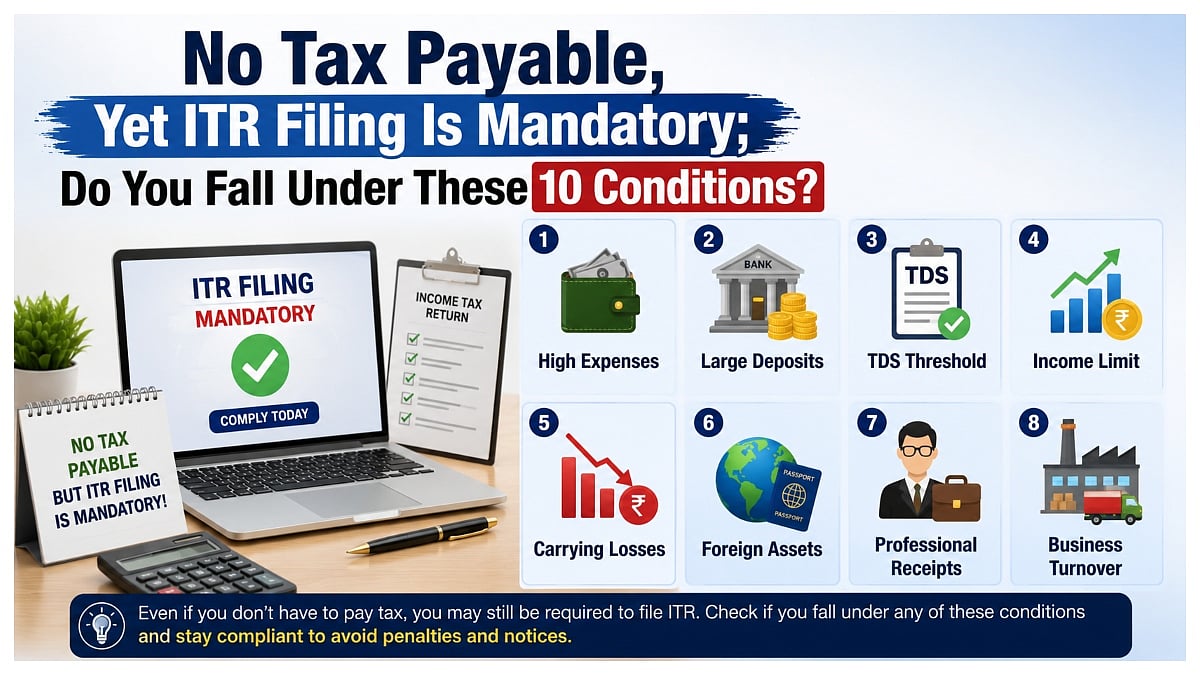
Mumbai: Many taxpayers believe they do not need to file an income tax return (ITR) when their annual income is below the basic exemption limit. However, tax rules specify certain situations where filing an ITR becomes compulsory even when no tax is payable.
For FY 2025-26, the basic exemption limit is Rs 2.5 lakh under the old tax regime and Rs 4 lakh under the new regime.
High Expenses
You must file an ITR if your total electricity bill payments for a home or office reach Rs 1 lakh or more during a financial year.
Return filing is also compulsory if you spend Rs 2 lakh or more on foreign travel for yourself or any family member.
Large Deposits
An ITR must be filed if total deposits in one or more savings bank accounts reach Rs 50 lakh or more during the year.
Similarly, depositing Rs 1 crore or more in one or multiple current accounts makes return filing mandatory.
TDS Threshold
You must file an ITR if your total tax deducted or collected at source—TDS or TCS—is Rs 25,000 or more during the financial year. For senior citizens, the applicable limit is Rs 50,000.

Income Limit
Return filing is compulsory when your total income exceeds the basic exemption limit applicable under your chosen tax regime.
Carrying Losses
If you suffer losses from shares, cryptocurrency, property transactions or business and want to carry them forward for adjustment against future profits, you must file the return within the prescribed deadline.
Foreign Assets
A resident Indian generally needs to file an ITR if they hold foreign assets, shares or bank accounts, even if no tax is payable in India.
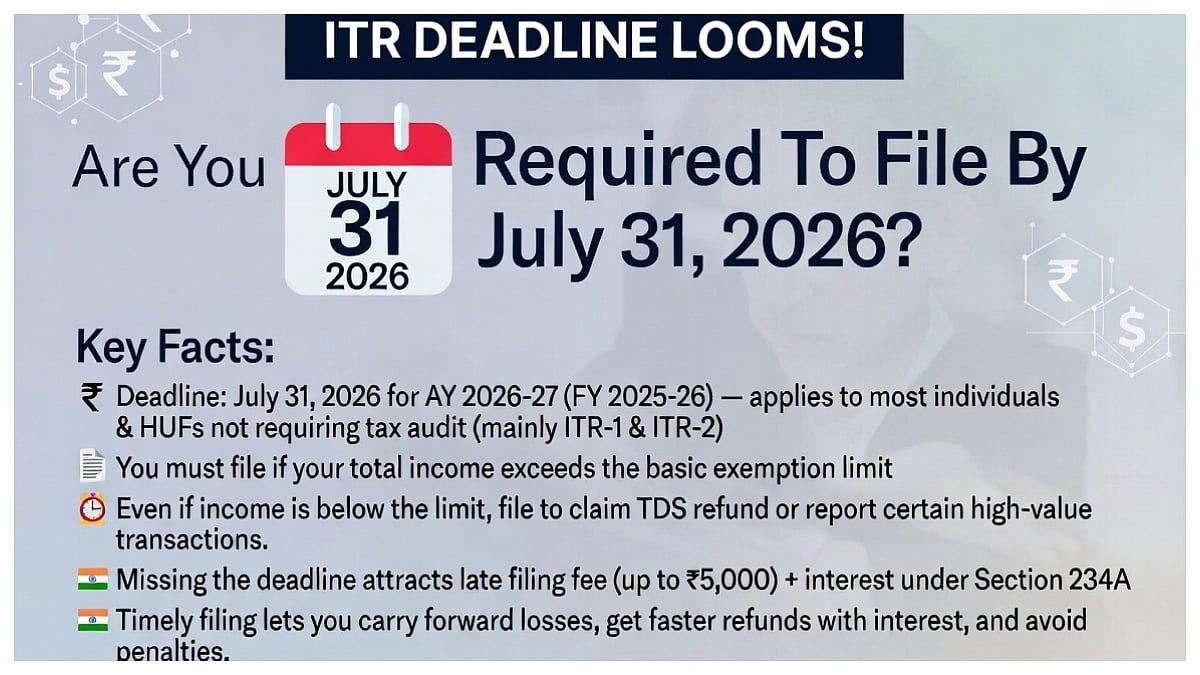
Professional Receipts
Freelancers, doctors, lawyers, IT professionals and consultants must file an ITR when their annual gross professional receipts exceed Rs 10 lakh.
Business Turnover
Business owners must file a return if their annual sales, turnover or gross receipts exceed Rs 60 lakh. This requirement applies even when the business reports little profit or suffers a loss.
Taxpayers should therefore check their banking transactions, spending, overseas assets and business receipts before deciding that an ITR is unnecessary.

