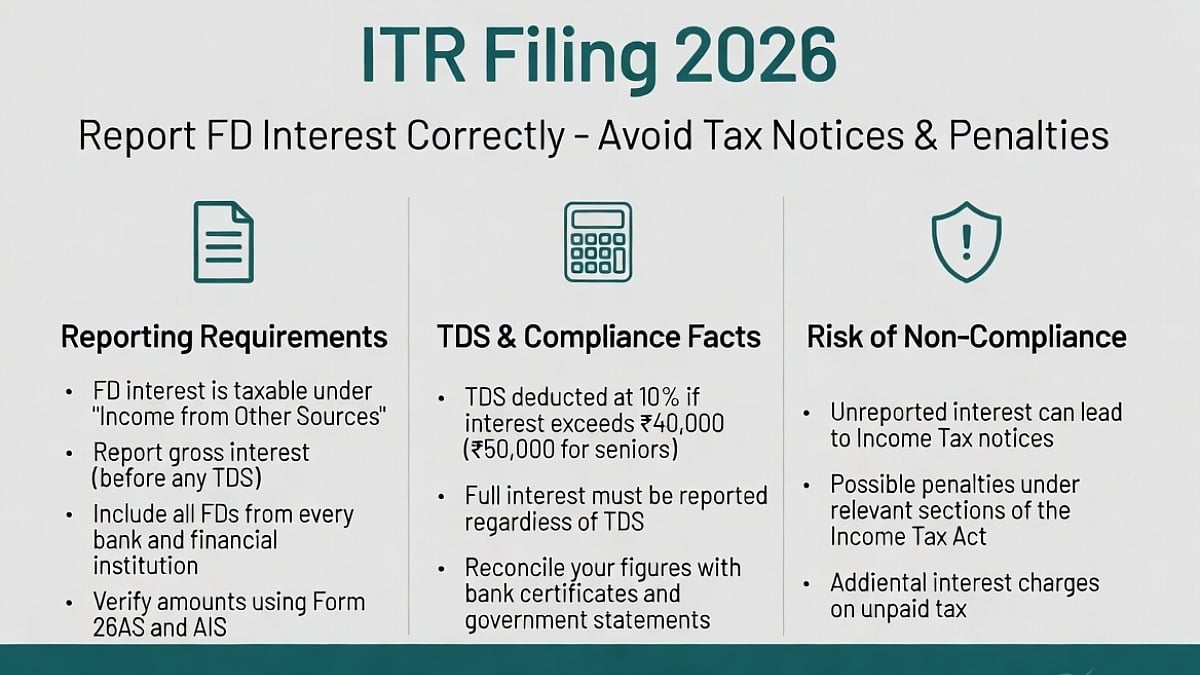
Mumbai: Fixed deposit interest may appear small, but leaving it out of an income tax return can cause problems. Taxpayers must disclose the interest earned yearly, even if the bank has deducted tax at source.
Where To Check?
Taxpayers can find FD interest details in bank statements, interest certificates, Form 26AS, the Annual Information Statement (AIS) and the Taxpayer Information Statement (TIS).
These records should be compared before filing. If there is a mismatch, taxpayers should verify the figures with the bank and report the correct amount.
How To Report?
The interest earned from fixed deposits must be added to the taxpayer’s income and disclosed under ‘Income from Other Sources’ in the ITR.
FD interest is taxed according to the taxpayer’s applicable slab rate. The liability may vary depending on age, residential status and whether the old or new tax regime is selected.
Senior Citizen Benefit
Resident senior citizens choosing the old tax regime can claim a deduction of up to Rs 50,000 under Section 80TTB. It covers interest from savings accounts, fixed deposits and recurring deposits.
However, the deduction cannot exceed the interest earned. This benefit is unavailable under the new tax regime.
Five-Year Tax-Saving FD
Under the old regime, investment in a five-year tax-saving FD may qualify for deduction under Section 80C. It forms part of the overall Rs 1.5 lakh annual limit available under the section.
TDS Is Not Final Tax
Banks generally deduct TDS at 10 percent under Section 194A when interest crosses the prescribed threshold. TDS is only an advance tax credit and does not remove the requirement to disclose the full interest income.
The TDS reflected in Form 26AS can be adjusted against the final tax liability. This may lower tax payable or result in a refund.
Eligible taxpayers may submit Form 15G or Form 15H to request non-deduction of TDS, subject to prescribed conditions.

Why Accuracy Matters?
Failure to disclose FD interest can create a mismatch with AIS or Form 26AS, leading to notices, additional tax, interest or penalties. Careful reconciliation before filing helps taxpayers avoid errors and claim all eligible deductions and TDS credits correctly.

