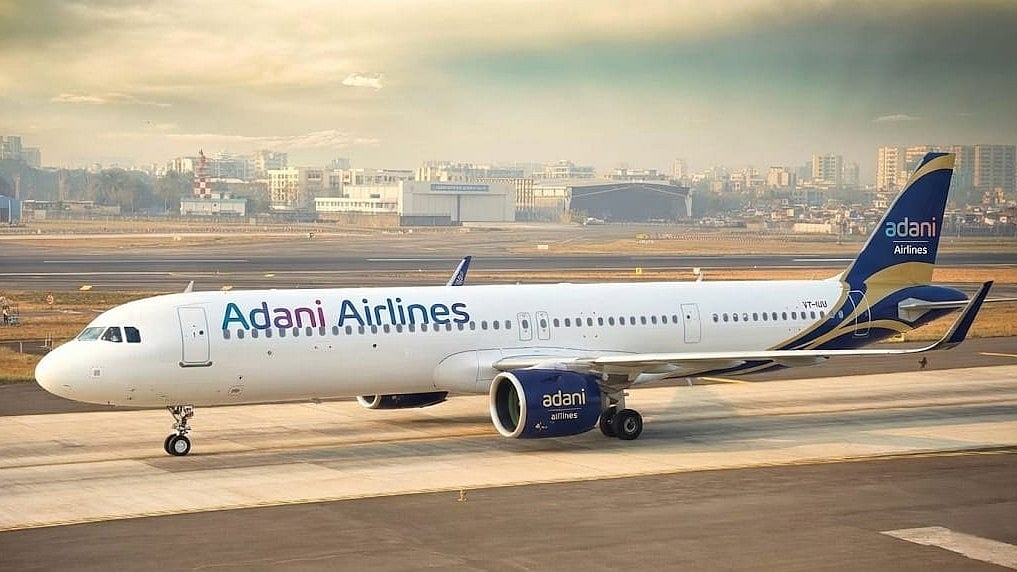
The Adani Group is considering launching a new airline, a move that could alter competition in India's aviation market, currently dominated by IndiGo and Air India, according to two sources with direct knowledge of the matter.
The move marks a shift for the ports-to-cement conglomerate, which operates eight airports in India, including two in Mumbai, and is pursuing an $11 billion airport expansion strategy. The group had previously maintained it was not interested in entering the airline business.
No final decision has been taken, and discussions remain at an early stage as the group evaluates the financial risks associated with the aviation sector, one source said, requesting anonymity because they were not authorised to speak to the media.
The source said the Indian government has privately encouraged several business groups, including Adani, to explore launching an airline following increased scrutiny of Air India after its fatal Ahmedabad crash last year and operational disruptions at IndiGo that led to widespread flight cancellations in December.
"It's a difficult business, but Adani wants to consider it in the national interest," the source said, adding that the government believes another major airline is needed in view of Air India's struggles and IndiGo's operational challenges.
Shares of Adani Enterprises fell more than 3% on Thursday after the report. The group has not set a timeline for any decision.
Aviation sector remains a high-risk bet
Gautam Adani, Asia's second-richest person with an estimated net worth of about $89 billion, would be making one of the boldest investments of his career if the plan moves ahead.
India's aviation sector has seen several failures over the past 15 years, with Kingfisher Airlines, Jet Airways and Go First entering bankruptcy amid high taxes, intense competition and supply-chain disruptions.
While the Adani Group has expanded rapidly in ports, airports and other infrastructure sectors, it has also faced legal scrutiny in the United States since 2024 over alleged bribes linked to a solar project. However, US authorities have recently decided to drop those charges.

Duopoly concerns and expansion options
India is among the world's fastest-growing aviation markets, but concerns over limited competition have grown as IndiGo holds a 65.4% share of the domestic market and Air India accounts for 25%.
The government aims to increase the number of airports to 350-400 by 2047, up from 74 in 2014, as passenger traffic rises and airlines place record aircraft orders with Boeing and Airbus.
Rajan Mehra, former India head of Qatar Airways, said Adani's entry "has the potential to reshape India’s aviation landscape," but added that India must also focus on robust regulatory safeguards and ensure there remains "a a level playing field for all airlines."
According to the second source, one option under consideration is acquiring a stake in an existing airline, adding that "all options" remain under consideration.
In December, regulators warned IndiGo of possible action after pilot shortages forced it to cancel thousands of flights, leaving passengers stranded and prompting government intervention to curb rising airfares.
Also Watch:
Existing challenges and conflict-of-interest concerns
Air India continues to face audit lapses following last year's Dreamliner crash that killed 260 people. Meanwhile, SpiceJet is dealing with financial difficulties and salary delays.
IndiGo shares fell more than 1% in Mumbai trading on Thursday after news of Adani's possible plans, while SpiceJet shares rose 10%.
In December, Jeet Adani, a director at Adani Airports, had told Reuters the group was not interested in operating an airline because of the sector's thin margins and because it lacked the "mindset" required to run a carrier.
"Our comfort and our core competency is in creating hard assets on the ground, long-gestation assets, running them quite efficiently," he had said.
The group has nevertheless continued to expand its aviation infrastructure business. Adani Airports plans to invest more than $2 billion in airport-linked commercial developments across six locations, including hotels, retail centres and office spaces.
The group has also approached the government seeking changes to rules that restrict certain airport operators from owning stakes in scheduled airlines, according to a report by The Economic Times.
Independent aviation analyst Brendan Sobie said, "There are niche examples of airports also owning airlines in markets such as Kyrgyzstan, Thailand and Vietnam ... Other airlines in India would rightfully be concerned about a possible conflict of interest."
Separately, Reuters previously reported that a March inspection by health officials found nicotine pouches being sold at Adani's Mumbai international airport duty-free shops in violation of the law. The company is challenging that decision in the Bombay High Court.

