Bhopal (Madhya Pradesh): The higher the buildings in an area, the hotter the place becomes. Therefore, it is necessary to determine an optimal height for buildings in a city. The ENVI-met software can help determine the ideal building density in an area to keep it cool and how much open space should be left.
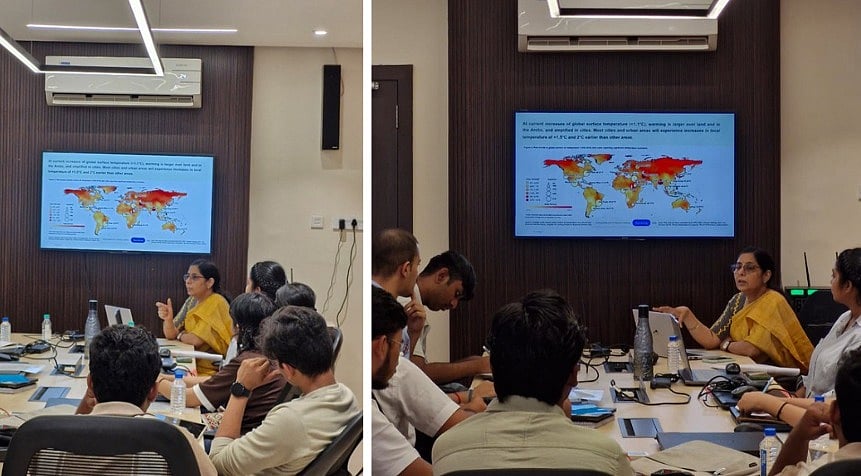
These were the views shared by experts, including town planners and architects, during the inaugural day of the five-day national hands-on workshop on 'Outdoor Microclimate Analysis Using ENVI-met Software' in the city on Thursday.
The Department of Architecture and Planning, Maulana Azad National Institute of Technology (MANIT), Bhopal, in association with the Institute of Town Planners, India (ITPI), Madhya Pradesh Regional Chapter, organised the event. The workshop is being coordinated by faculty coordinators Naveen Prashar, Surabhi Mehrotra, and Arshi Parashar.
The inaugural session was graced by Vishnu Khare, Joint Director, Town and Country Planning, Ujjain, and Chairman, ITPI MP Regional Chapter; Anupama Sharma, Dean, ID & IR, MANIT Bhopal; and Prof. Krishna Kumar Dhote, Head, Department of Architecture and Planning, MANIT Bhopal, and Vice-Chairman, ITPI MP Regional Chapter. They highlighted the growing need for climate-sensitive urban planning, sustainable city development, and the adoption of advanced digital tools to address environmental challenges through scientific and data-driven approaches. They said that cooler cities can be developed through microclimate assessment.

The event featured expert lectures, hands-on simulation exercises, field data collection, laboratory sessions, and real-world case studies aimed at developing practical skills in outdoor microclimate assessment. The technical sessions covered the fundamentals of urban microclimate, thermal comfort, and sustainable urban planning, and introduced participants to the ENVI-met software, its simulation workflow, and its applications in urban environmental research and planning.
The day concluded with a hands-on practical session on software installation, interface familiarisation, project creation, and initial model development. Participants from universities and colleges across the country, along with students, academicians, researchers, architects, planners, and practising professionals, took part in the workshop to enhance their knowledge of urban microclimate analysis and climate-responsive planning.
The workshop will continue over the next four days with advanced simulations, practical laboratory exercises, and field-based learning, providing participants with valuable technical expertise in sustainable and climate-responsive urban design.