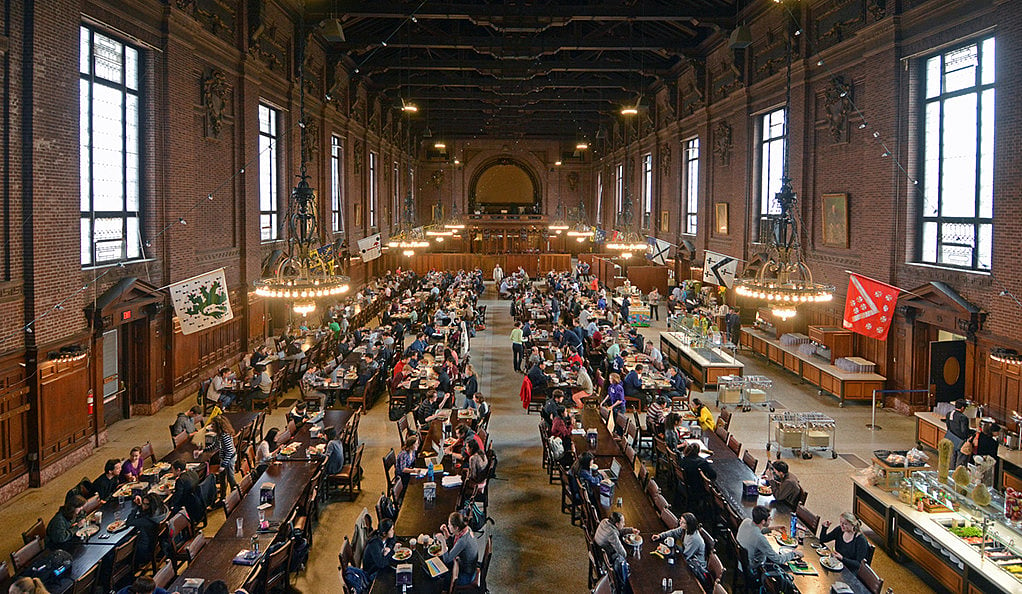
In April 2025, the president of Yale University, USA, appointed a committee of professors from the university ‘to examine the problem of declining trust in higher education’, to engage with a variety of perspectives from within and outside and to look into a few important issues like the problem of self-censorship on campus. After wide-ranging deliberations, the committee submitted its report in April 2026.
It is a wide-ranging report which discusses issues of tuition prices and admission policy, political bias on campus and technology in the classroom, self-censorship and university governance, and grade inflation. While the report is meant to be specific to Yale, it looks at the larger picture and draws lessons that any university administration can learn from. In this context, I briefly summarise two key aspects of the report.
The first key aspect is the issue of declining ‘trust in higher education’. For centuries, universities have existed ‘to preserve, create and share knowledge’. This is the essential basis for public trust in higher educational institutions. However, in recent years, according to public surveys, almost 70% of Americans in 2025 believed that higher education in their country was headed in the wrong direction. The report identifies three key factors behind this perception. First, the soaring price of higher education in the United States; second, the complex college admissions system (who gets in and why); and third, a range of issues about what is ‘said and taught on university campuses’ involving matters of free speech, self-censorship, and political bias. There are other internal issues related to declining trust, like grade inflation, new technologies, and bureaucratic expansion in universities.
Fundamentally, trust is earned by doing what you say you’re going to do and, ideally, doing it well. However, in recent years, as universities tried to respond to different and often conflicting expectations, there was growing uncertainty about what universities really do, eroding public trust in them.
While all civic institutions critically depend on public trust to function effectively—and public trust in all these institutions has been declining since the 1970s in the United States—it is particularly important for higher education to succeed. If, for whatever reason, the public ceases to believe that colleges and universities are actually imparting professional skills, expertise, and knowledge to their students through their personal efforts, then the trust necessarily suffers.
By definition, trust is relational: it requires that all parties agree broadly on values, goals and methods. However, increasingly, there has grown a wide gap between what the public wants from its institutions of higher education and what they appear to deliver. The problem is that while on one level, institutions of higher education are necessarily embedded in the larger society that creates and supports them, at the other level, universities must also have ‘the right to think the unthinkable, discuss the unmentionable, and challenge the unchallengeable’. In other words, universities must also provide a unique setting where they stand at a certain distance from society, are shielded from commercial and political pressures, and are able to exercise a protected autonomy. Thus, sustaining public trust remains an ongoing challenge for universities.
Another fundamental aspect of a modern university is the principle of academic freedom to ensure that research and teaching can be conducted without any external pressure or impediment. It must be a place where new ideas are allowed to emerge and to ripen. In practice, however, the history of academic freedom is also a history of political pressure. Not surprisingly, American universities have had their share of conflicts with the political power of the day from time to time.
At Yale University, protection of free speech has always been identified as fundamental for university life since, without it, there can be no open debate or honest search for truth. This includes the right of invited speakers to express their views without being shouted down or otherwise obstructed as well as the right to peaceful dissent and protest on campus without unduly disrupting the basic functions of the university. Crucially, free speech is meant ‘to protect all forms of speech, not just those favoured at a particular moment’.
But this does not mean that the university campus has been immune to pressures toward ‘conformity, intimidation, and social shaming’. These pressures have magnified of late because of easy and wide access to videos of controversial confrontations, as much of the campus life is now online. This has also led to the emergence of a ‘cancel culture’ where one wrong word or departure from campus orthodoxy might lead to outsized punishments and social sanctions.
While certain forms of self-censorship and norms of social decency are integral to any functioning society, self-censorship—driven by fear of personal attack, academic backlash or other kinds of political pressures—undermines the principle of free speech and academic freedom. However, such self-censorship is on the rise among students across the spectrum and even among the faculty. Increasingly, even permanent faculty feel the pressure of keeping quiet or refraining from saying what they really think. Now, faculty at all levels worry that a ‘wrong book’ on the reading list or a ‘wrong’ idea expressed on social media could damage their careers or could even get them fired. Simultaneously, the faculty are also alarmed by the mounting pressure from government authorities.
In other words, the challenge of protecting and promoting free speech and academic freedom on the campus is an ongoing process.
Vrijendra taught in a Mumbai college for more than 30 years and has been associated with democratic rights groups in the city.

