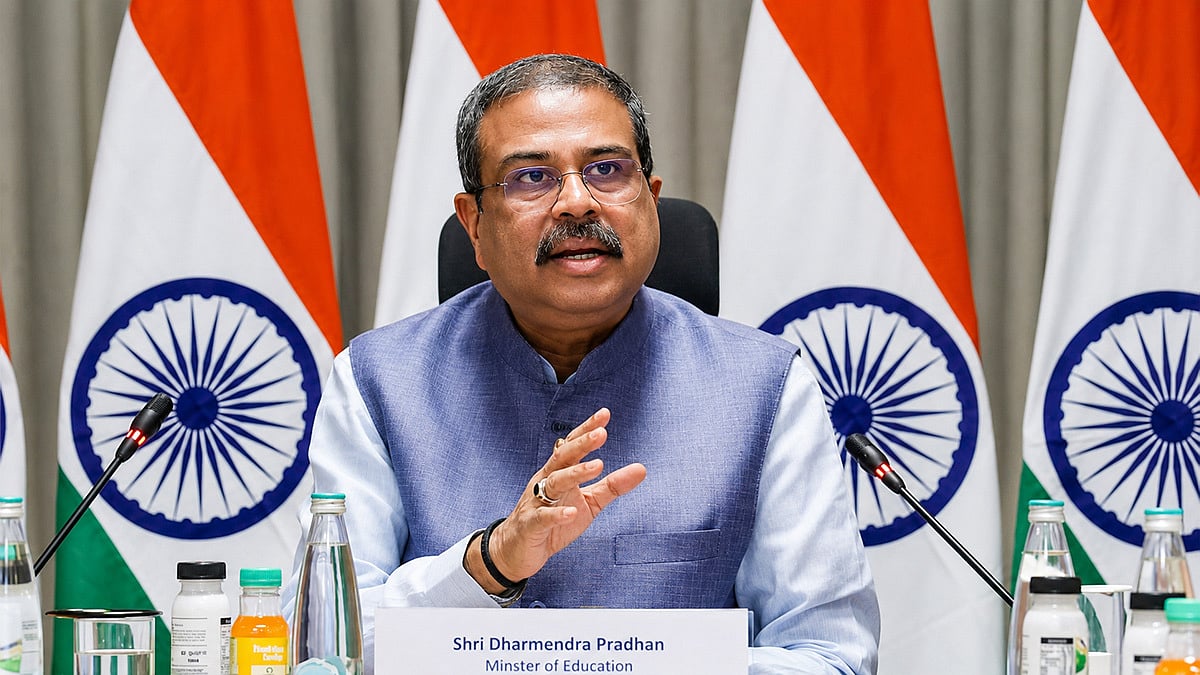
The pomp and celebration with which Dharmendra Pradhan was received by his colleagues in the Bharatiya Janata Party (BJP) in Parliament as he walked in a day after his resignation as India's education minister surprised many.
Pradhan was no hero of the moment, no achiever of difficult assignments to receive the headgear and the stole that were bestowed upon him. The only distinction, a dubious one at that, he could boast of was that he was the first minister in any Cabinet since 2014 to have been forced to step down.
His hand was forced not by political circumstances or personal commitments but by the powerful uprising of lakhs of students and young Indians across the country, most prominently at Delhi's Jantar Mantar, where they were met with the viciousness of lathis with embedded nails, tear gas shells and pellet guns of the Rapid Action Force.
Accountability In Education
Pradhan, as the Cabinet minister in charge of education, had to be held accountable and responsible for the repeated exam paper leaks, most notably of the all-important NEET examination taken by millions of students this year, and the absolute mess in the marking of CBSE answer sheets, besides other sins of omission and commission in India's education sector.
As many as 21 students died by suicide after the NEET paper leaks, mentioning them as the final straw. If anything, Pradhan should have been contrite about it all, shown some remorse and perhaps even offered an apology.
Instead, given the track record of the government he was a part of, which does not accept accountability or responsibility for its deeds and decisions, Pradhan braved it out, perhaps secure in the belief that he would not be held answerable. Students and other young Indians, evidently, had other ideas. They prevailed; their demand won the day.
Celebration Sparks Criticism
Pradhan, a student leader of the BJP's student wing, the Akhil Bharatiya Vidyarthi Parishad, from Odisha, who had, ironically, protested against paper leaks in his student days, is a consummate and successful politician after all—with thick skin and low ethics.
Even by those standards, he failed the test. His colleagues who felicitated him, "garlanding him as if he had returned after fighting a war with Pakistan... returned victorious from the border", as Congress MP Gaurav Gogoi pointed out, clearly have even lower standards of ethics and probity in public life.
Essentially, what Pradhan and his exultant colleagues in Parliament were conveying to the protesters, some of whom lay injured and hundreds of whom now face FIRs, is that their act of putting their lives on the line did not matter.
The act was like cocking a snook at the young; it showed not only their insensitivity but also the utter lack of accountability—precisely what the protesters had demanded all along.

