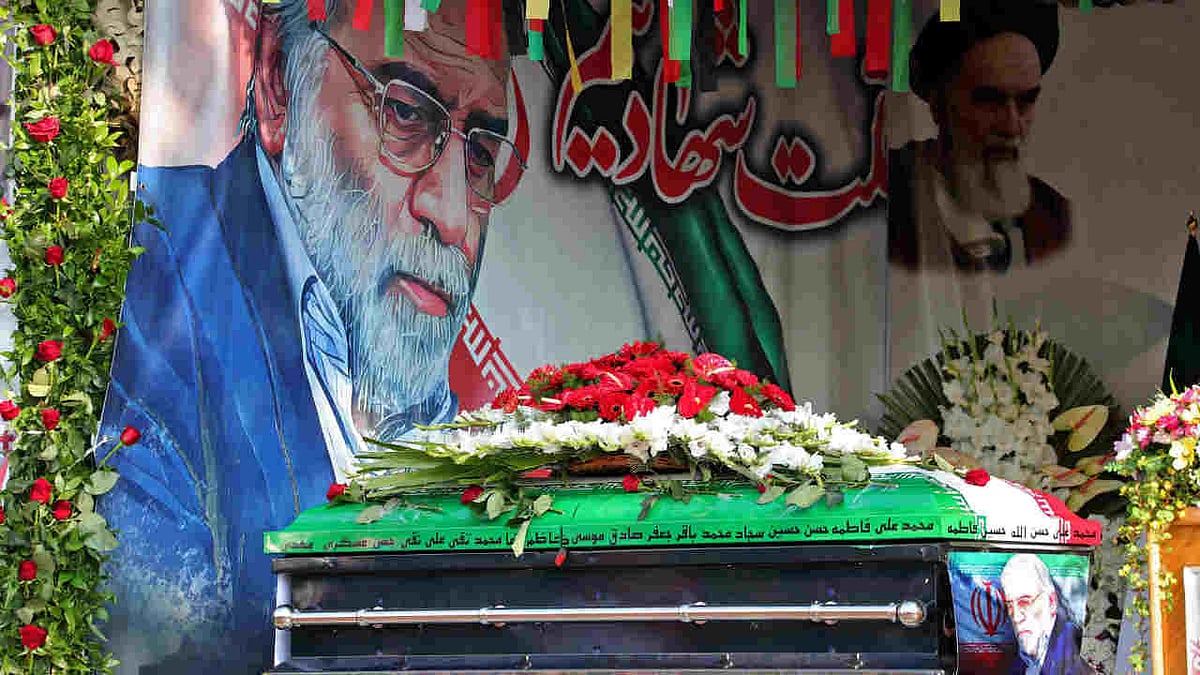
In a massive display of national mobilisation and geopolitical messaging, Iran, last week, orchestrated six-day funeral ceremonies for its late supreme leader, Ayatollah Ali Khamenei, into a strong demonstration of strength and unity, interpreted by many geopolitical experts as a signal of the Islamic Republic’s defiance and a new regional order.
Rather than looking weakened and embattled by the war, Iran projected an image of cohesion and strength, determined to shape and control what comes next in the Middle East, where geopolitical tensions have negated all regional and international diplomatic efforts to achieve peace for decades.
The funeral was more than just a national farewell. Geopolitical analysts see it as an attempt by the Iranian leadership to assert its continuity, resilience and ideological resolve on both domestic and international stages.
Funeral As Political Message
By leveraging the period of mourning through a sea of grievers, the regime in Tehran succeeded in sending an unambiguous message to the US and Israel that their attempt to break the Islamic Republic has failed. The elaborate rites, spanning multiple cities across Iran and extending into Iraq, were a meticulously planned event to serve as a powerful platform for the Iranian leadership to affirm its ability to survive overwhelming military power and depict the funeral as the moment to transform endurance into leverage for its negotiating strategy with the US. Beyond public grief, the funeral was crafted to project an image of Iran’s national unity behind a religious ideology and theocratic regime that the US despises.
The sentiment that resonated through official statements framed Khamenei’s death as martyrdom and underscored a commitment to the “path of resistance”. Khamenei’s passing was described as “the beginning of a new chapter of national unity, resilience, and progress”, reinforcing the legitimacy of the leadership and the continuing principles of the Islamic Revolution, which had abruptly severed the decades-old US-Iran alliance in 1979, replacing a pro-Western monarchy with an anti-Western Islamic republic.
This shift reshaped US domestic politics, triggered a severe energy crisis and soaring inflation in the US, and established Iran as a primary adversary driving US foreign policy and military strategy in the Middle East.
The Islamic Revolution created a lasting divide in the region, with the US aligning closely with countries like Saudi Arabia and Israel to counterbalance Iran’s regional influence.
The US’s posture of containment has led to decades of severe economic sanctions on Iran and occasional direct military confrontations and targeted killings of Iranian military commanders, scientists and others, including the death of Khamenei in a US-Israeli airstrike on February 28.
This backdrop infused the funeral with heightened geopolitical strain and added another layer of significance to the demonstration of power amid the fresh escalation of tension between the US and Iran, leading to renewed hostilities since last weekend.
Internal Divisions Persist
However, despite the unprecedented display of mourning and mobilisation, Iran is not entirely a united society behind its religious ideology. It is rather a polarised nation defined by a structural rupture between the general populace and the theocratic regime.
The regime maintains tight control over civic spaces, but there exists considerable disconnect between citizens and the authoritarian government, with sections of the population desiring democratic reforms, individual freedoms and a less restrictive lifestyle.
Years of broad international and US sanctions have severely crippled Iran’s economy, causing hyperinflation, the devaluation of its currency and the severe erosion of its middle class. This has caused a cost-of-living crisis, fuelled anger against the government and repeatedly triggered nationwide protests.
The US-Israel war on Iran was aimed at regime change and weakening the Islamic republic militarily. Other objectives were to prevent Iran from acquiring nuclear weapons, dismantle its ballistic missile programme, eliminate the operational capability of the Iranian navy and neutralise the regional power of Iranian-backed proxy militias.
Having failed in most of these objectives, and notwithstanding Trump's rhetoric and threats, the US President realises that he is in a position where ending the war is necessary.
The two-month ceasefire and Memorandum of Understanding (MoU) between Iran and the US were intended by Washington to revive diplomacy to find a way to stop Iran from developing a nuclear arsenal. But now the nuclear issue is on the back burner, and the focus has shifted to control over the Strait of Hormuz.
Hormuz Emerges As Key Leverage
According to geopolitical experts, if the war has underlined Iran’s leverage over Hormuz, a vital waterway for the flow of energy to the world, it has also enabled Iran to demand that any deal on its nuclear programme should begin with recognition of its control over the crucial oil checkpoint.
Experts believe that, more than enriched uranium, the Strait has turned out to be Iran’s most important asset, as Tehran is seeking to convert wartime gains into a lasting strategic advantage by asserting its dominant position around Hormuz and securing its acceptance by the US. By asserting its sovereign legitimacy over the Strait, experts are of the view that Iran sees Hormuz as both an economic asset and a source of political legitimacy.
Hormuz is a post-war reality that the US has forced upon the Gulf nations, as they wait to see whether Trump can force Iran to surrender its claim on the Strait, which carries a fifth of global oil and natural gas supplies. Iran seems happy to play the long game, knowing fully well that Trump is under pressure to get out of the difficult situation quickly before the US mid-term elections in November.
Constrained by domestic politics, Trump is under more pressure to make a deal than Iran is to soften its stand and make concessions. The worry for Washington is that, by halting the war without resolving the issues that caused it, Trump may have helped elevate Hormuz from being just a pressure point to a major source of advantage for Iran.
As of now, even intermittent military attacks by the US on Iran are not helping Trump force Iran to change its position on the Strait. Iran suffered heavy losses in the war and knows that it will have to give in some ways, but it may lose less than the US will. The question is: are both sides overplaying their hands in this tug-of-war?
The writer is a senior independent Mumbai-based journalist. He tweets at @ali_chougule

