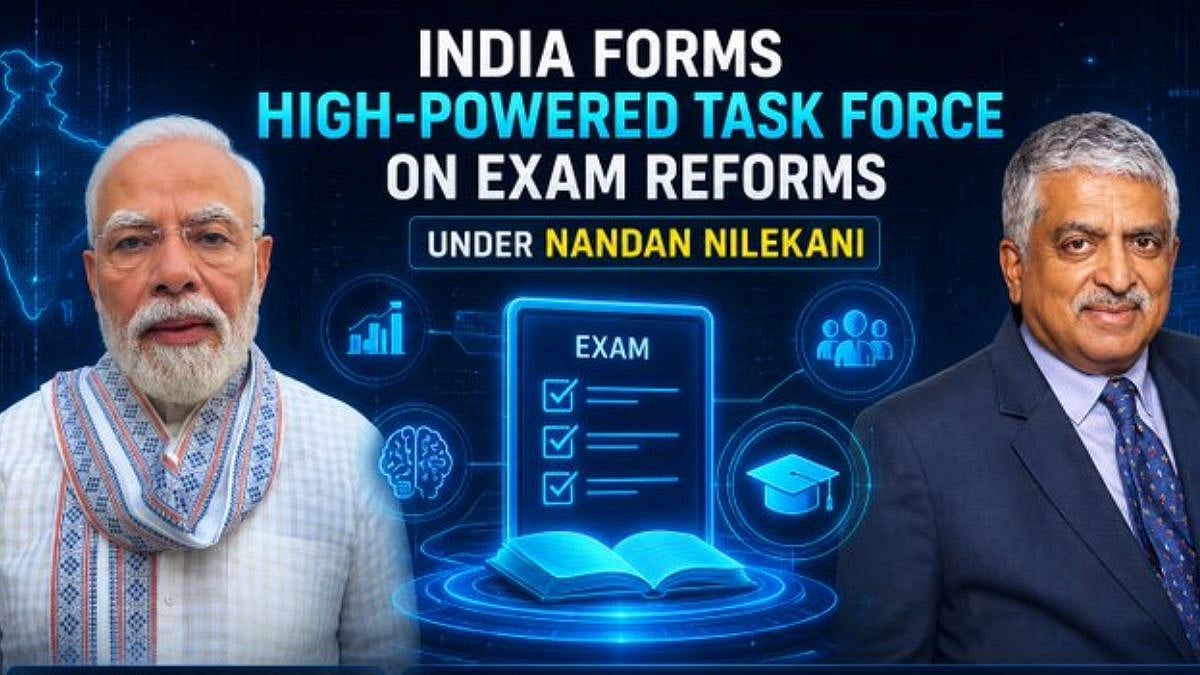
Mumbai, July 27, 2026: It has taken 12 years for Prime Minister Narendra Modi to acknowledge what millions of students and their parents have known for years: India's public examination system is in urgent need of an overhaul.
The decision to constitute a high-powered committee under Infosys co-founder Nandan Nilekani is welcome in principle. But the timing and composition of the task force raise doubts about whether the government is genuinely committed to structural reform or is merely attempting to defuse public anger.
The announcement came not after introspection but after a nationwide student agitation over repeated failures in the conduct of public examinations, culminating in the resignation of Education Minister Dharmendra Pradhan. Had the government acted when the NEET question paper leak first exposed the rot in the system, much of the distress and uncertainty could have been avoided.
Crisis Of Credibility
In any mature democracy, the minister concerned would have accepted moral responsibility and resigned immediately. The explanation that the resignation was necessary to prevent foreign agencies from exploiting the agitation only diverted attention from the real issue: the collapse of public confidence in the examination system. NEET was merely the most visible symptom. Reports had already suggested that the CBSE's systems had been compromised.
The Common University Entrance Test (CUET), introduced to streamline admissions, has itself become a source of confusion. Delays force students to secure admission elsewhere, pay hefty fees, and later seek migration to central universities. Candidates are often allotted examination centres hundreds of kilometres from home, imposing needless financial and emotional burdens on families.
The problem extends from school-leaving examinations to university entrance tests. Ad hocism has replaced planning, transparency is missing, and credibility has steadily eroded. Whether at the central or the state level, examination boards require thorough institutional reform rather than piecemeal technological fixes.
Questions Over Committee
Unfortunately, the composition of the committee does not inspire much confidence. Its remit has not been clearly explained. While Nilekani's technological expertise is unquestionable, the inclusion of former Intelligence Bureau chief Tapan Deka and IIT Madras Director V. Kamakoti raises legitimate questions.
Deka has long been regarded as a trusted favourite of the government, having received almost three extensions as IB chief, an exceptional tenure that reflected the confidence the political leadership reposed in him. Kamakoti, meanwhile, has attracted greater public attention for promoting the purported medicinal value of cow urine than for advocating reforms in public examinations. India needs nothing less than a root-and-branch overhaul of its examination system.
Such a task requires educationists, assessment specialists, psychologists and administrators with proven expertise in educational reform. A committee that appears designed more to extinguish the flames of a protest than to diagnose and cure the underlying disease is unlikely to restore confidence in a system that has already failed too many students.

